
Best Bathtub Cleaner: Toxin-Free Picks For A Sparkling Soak
 Written by Irina Webb
Did you know the average person spends over 700 hours in the bathtub in their lifetime? That’s a lot of time soaking—and also a lot of opportunity for grime to build up! Yet, cleaning bathtubs is one of those chores we rarely talk about.
Let’s be honest—bathtubs work hard. They collect everything from soap scum and body oils to mold and mildew. That’s why it’s so important to choose cleaning products that are health-safe and preferably planet-friendly. No one wants to breathe in harsh VOCs or toxic fumes while scrubbing their supposed sanctuary. Just as no one wants the chemicals that go down the drain to come back in the drinking water.
Therefore, in this post, you will get a carefully curated roundup of the best bathtub cleaners I actually recommend—safe, effective, and toxic-free.
What Is The Best Bathtub Cleaner?
To start, if you enjoy soaking in your tub, it’s important to make sure the water you’re relaxing in is clean. I recommend checking out my blog post, Bathtub Water Filters: How They Work And The Best One For You—I think you’ll find it helpful.
Now, let’s chat about why choosing the right cleaning solutions matters. First, you want a product that cuts through grime, soap scum, and stubborn stains. Second, it’s equally important that this product is non‑toxic, biodegradable, and free from harsh chemicals.
If you’re a DIY enthusiast, you can easily find recipes online for homemade bathtub cleaners—like a simple paste made from hydrogen peroxide and baking soda. But if you prefer store-bought products, be prepared for longer ingredient lists.
Ultimately, the only reliable way to find a safe cleaner for your bathtub is to read the ingredient labels carefully and avoid those that contain potentially harmful substances. Below I listed some of them:
- Ammonia
- Chlorine
- Benzisothiazolinone
- Methylisothiazolinone
- Methylchloroisothiazolinone
- Fragrance (parfum)
- Ethoxylated compounds
- DMDM hydantoin
I reviewed several commercial bathtub cleaners currently on the market and put together a list of ones I don’t recommend, as they contain some of the concerning ingredients mentioned earlier.
“Not-A-Fan” Bathtub Cleaners
The products listed below either contain one or more of the ingredients mentioned above or fail to disclose their ingredients entirely—which, to me, is a major red flag:
- American Acrylic Clean Way Bathtub Cleaner (undisclosed ingredients)
- Ecolab Foaming Shower, Tub and Tile No-Scrub All Purpose Cleaner
- Everspring Tub & Tile Cleaner
- Kaboom Shower, Tub & Tile Cleaner
- OdoBan Ready to Use Liquid Shower Tub & Tile Cleaner Spray
- Scrubbing Bubbles Bathroom Grime Fighter Disinfectant Spray
- The Vermont Country Store Tub & Tile Spray Cleaner
- Method Foaming Tub & Tile Cleaner (read Are Method Cleaning Products Safe?)
- Mrs. Meyer’s Lavender Tub & Tile (read Are Mrs. Meyer’s Cleaning Products Safe?)
How To Find Safe Cleaning Products For Bathtubs
Here are the helpful tips to rely on when choosing tub cleaners:
- Be skeptical of greenwashing.
- Read ingredient labels carefully.
- Avoid products with harmful chemicals.
- Skip products without full ingredient disclosure.
- Choose products with simple plant-based ingredients.
- Consider making your own bathtub cleaner.
Let’s discuss each of them a little bit more.
Be Skeptical Of Greenwashing
First, greenwashing is a marketing tactic where brands exaggerate or falsely claim to be environmentally friendly. Companies may use misleading terms like ‘natural,’ ‘eco,’ ‘pure’ or ‘green’ without meeting any official or verifiable standard. Also, I wouldn’t rely just on packaging aesthetics—earth tones, leaves, or images of nature can be deceptive. Learn about some extreme cases in my blog post 10 Examples Of Greenwashing In Advertising.
Read Ingredient Labels Carefully
Second, understanding the ingredient list is critical for identifying harmful substances or misleading claims. Learn to recognize common toxic substances and prioritize transparency. If a label lists ‘fragrance’ or ‘parfum,’ that’s a red flag, particularly if there’s no further breakdown.
By the way, to identify a toxic personal care product in a matter of seconds, use the tool I created—Your Savvy Consumer Superpower.
Avoid Products With Harmful Chemicals
Third, the least you can do is ditch the products with the one or more of the following ingredients:
- Ammonia
- Chlorine
- Benzisothiazolinone
- Methylisothiazolinone
- Methylchloroisothiazolinone
- Fragrance (parfum)
- Ethoxylated compounds
- DMDM hydantoin.
The truth is many synthetic chemicals are linked to hormone disruption, allergies, sensitization, and other health risks, including cancer. Additionally, they may persist in the environment, harming ecosystems.
Skip Products Without Full Ingredient Disclosure
Further, if a product doesn’t list all of its ingredients, that’s a strong reason to avoid it. Lack of transparency is a red flag and often hides controversial ingredients. Indeed, as a consumer, you have the right to know what you’re using in your home. Brands that disclose everything are usually more trustworthy and committed to safety. Hidden ingredients are especially dangerous for people with allergies or chemical sensitivities. Avoid products that list vague terms like ‘fragrance’ or ‘surfactants’ (cleaning agents) without specifics. Transparency is key to safety.
Choose Products With Simple, Plant-Based Ingredients
Next, the fewer ingredients, the easier it is to evaluate safety. Simple formulations made with recognizable, plant-based ingredients are generally less likely to cause harm. Some examples are sodium bicarbonate, castile soap, organic plant extracts and oils.
Consider Making Your Own Bathtub Cleaner
Last, DIY cleaners allow you to control exactly what goes into your formulas, reducing your exposure to synthetic preservatives and fragrances. It’s also a great way to reduce plastic waste and save money. Steer clear of ingredients such as chlorine bleach and ammonia—these can be irritating to skin, eyes, or lungs and may pose health risks over time.
Instead, use safer, natural alternatives. For instance, baking soda acts as a gentle abrasive to scrub away grime and white vinegar helps dissolve soap scum and disinfect surfaces. And hydrogen peroxide is a powerful yet safer disinfectant that can tackle mold, mildew, and bacteria without the harsh fumes of bleach.
What Is The Best Cleaning Product For Bathtubs?
In my opinion, the “best” cleaners for bathtubs use no known ingredients of concern. Conversely, their formulations contain:
- baking soda
- vegetable soap (aka castile soap)
- mild surfactants (like glucosides)
- safe preservatives (in liquids, like leuconostoc/radish root ferment filtrate) or no preservatives (in powders), and
- essential oils for scented versions.
Here are some of the best and safe cleaners I’ve used.
Pure Haven Scrubbing Cleanser
- Key ingredients: Baking soda known for its deodorizing, grease-cutting, and virus-fighting capabilities and organic lemon peel oil known for its purifying properties and its acidity, which makes it ideal for removing stains, germs, and soap scum.
- Surfaces: Use on sinks, showers, bathtubs, stovetop, tile, toilets, and other similar surfaces.
- How I use it: I shake it well and dispense some cleanser onto a damp sponge or cloth. Then I rub it vigorously over the surface, wipe it with warm water or rinse the tub. I find it ideal for regular deep clean after showers as well. It has a mild, not overpowering scent and foams well. I really love this scrubbing cleanser and use it for sinks and dishes too!
- Where to buy: Pure Haven Scrubbing Cleanser
- Learn more: Pure Haven Review
Additionally, I enjoy using other Pure Haven household products like:
- Surface Cleaner
- Liquid Dish Soap
- Laundry Detergent
- Liquid Dishwasher Detergent
- Master Blaster Stain Remover & Deodorizer
Meliora Gentle Home Cleaning Scrub Powder
- Key ingredients: Baking soda and vegetable soap made with organic coconut oil. The scented version also contains organic peppermint and organic tea tree essential oils.
- Surfaces: Most hard surfaces such as stainless steel, porcelain enameled steel, ceramic tiles, and stovetops. Do not use it on natural, sealed stone, or non-stick cookware.
- How I use it: I start by wetting the bathtub with warm water, let it sit for about 20 minutes, and then rub the powder around the tub using a scrub brush. Afterwards, I rinse the tub to remove any remaining powder.
- Where to buy: Meliora Gentle Home Cleaning Scrub Powder
- Learn more: Truly Amazing Eco Non-Toxic Cleaning Products
In addition to safe ingredients, I appreciate Meliora’s eco-friendly packaging. Thus, the Cleaning Scrub Powder comes in a paper can with steel end and cap that you can recycle. In fact, you will also like the following products by Meliora that come either in recyclable packaging or none altogether:
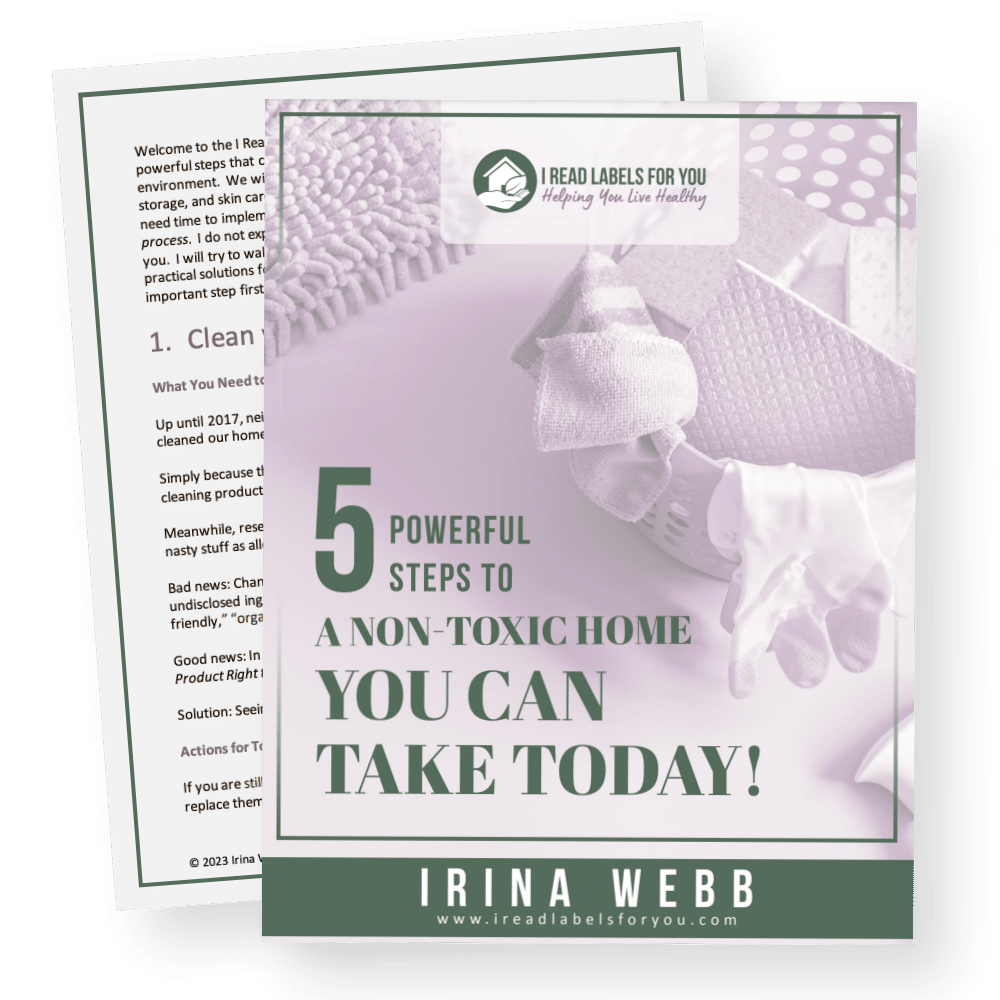
Download The Free Guide!
5 Powerful Steps To A Non-Toxic Home
Join our informed consumer community and get our free guide the “5 Powerful Steps To A Non-Toxic Home”.
Branch Basics Liquid Concentrate and Powder Oxygen Boost
- Key ingredients: Baking soda, glucoside cleaning agents, organic chamomile flower extract and sodium percarbonate.
- Surfaces: These products work great on all surfaces and can clean mold and mildew, soap scum, drain, grout, stubborn stains deposited by hard water, tile floors, porcelain enameled steel, and other surfaces. Just follow the instructions in the User Guide available on the website to make your cleaning solutions.
- How I use it: To give a deep clean to my tub or shower, I spray the surface with the Concentrate solution I keep in a spray bottle, sprinkle Oxygen Boost on top, let it sit for a few minutes, then scrub with a scrub brush and rinse with warm or hot water.
- Where to buy: Branch Basics Concentrate and Oxygen Boost
- Learn more: Branch Basics Safe Cleaning Products Review
Humble Suds All-Purpose Cleaner and Scrubbing Paste
- Key ingredients: Castile soap, baking soda, and organic essential oils.
- Surfaces: Any sealed surface. The products, especially the Scour scrubbing paste, work with stains, grout, stove tops and ovens, pots and pans, sinks, tubs, soap scum and more. Be sure to follow the User Guide available on the website for detailed directions and cleaning tips.
- How to use: Spray the liquid cleaner liberally, let stand up to 10 minutes before wiping. As for the Scour scrubbing paste, apply tablespoon amount to the tub surface with cloth, hand, or sponge and scrub in circular motions. Rinse the tub well.
- Where to buy: Humble Suds All-Purpose Cleaner and Scour Scrubbing Paste
- Learn more: Humble Suds Non-Toxic Cleaners
MamaSuds All-Purpose Cleaner
- Key ingredients: Castile soap, organic aloe vera gel juice, and a blend of essential oils including clove bud, organic cinnamon leaf, lemon, eucalyptus radiata, and rosemary. Note: clove oil and some other essential oils are reportedly harmful for cats (source).
- Surfaces: Various surfaces, including countertops, floors, sinks, tubs and more.
- How to use: Spray the solution on the tub, leave for 10-20 minutes, then rub with a cloth, sponge or scrub brush and rinse.
- Where to buy: MamaSuds All-Purpose Cleaner
Conclusion: What Is The Best And Safe Bathtub Cleaner?
In My Opinion, Some Of The Safest Bathtub Cleaner Formulas Contain Baking Soda, Castile Soap, Mild Glucoside Surfactants, And Gentle And Safe Preservatives.
To sum up, to be sure you are using a safe bathtub cleaner, look at the product’s label and avoid using it if it contains any of the following ingredients:
- ammonia
- chlorine
- benzisothiazolinone
- methylisothiazolinone
- methylchloroisothiazolinone
- fragrance (parfum)
- ethoxylated compounds
- DMDM hydantoin.
Particularly if you’re pregnant, make certain to check out my List Of Cleaning Products To Avoid While Pregnant.
Ultimately, the best bathtub cleaner is one that balances effective removal of soap scum, mineral deposits, mold and mildew, with gentle, non-toxic ingredients. Some safe options to consider include:
- Pure Haven Scrubbing Cleanser
- Meliora Gentle Home Cleaning Scrub Powder
- Branch Basics Concentrate and Oxygen Boost
- Humble Suds All-Purpose Cleaner and Scour Scrubbing Paste
- MamaSuds All-Purpose Cleaner
Keep the cleaning simple:
- Spray or rub the product on the tub.
- Wait for 20 minutes or less.
- Scrub with a brush or cotton cloth (I wouldn’t use a microfiber cloth due to the environmental concerns caused by microplastics)
- Rinse with warm or hot water.
I encourage you to visit the I Read Labels For You blog for practical advice on healthy living. Also, explore my non-toxic shop for other cleaning and personal care products, my Amazon storefront, and my unprecedented e-books created to help you make wise decisions. Lastly, unlock premium offers, unique resources, and inspiring tips to support your wellness journey—just by getting my free emails!
Download The Free Guide!
5 Powerful Steps To A Non-Toxic Home
Join our informed consumer community and get our free guide the “5 Powerful Steps To A Non-Toxic Home”.




Before commenting, please read our Comment Policy.