
The Non-Toxic Dry Shampoo Guide (2026): What’s Safe, What’s Not
 Written by Irina Webb
A non-toxic dry shampoo is a powder (or spray) that refreshes your hair without aerosol propellants, synthetic fragrance, or other ingredients of concern. Instead, it uses simple ingredients like corn starch, rice starch, arrowroot, or clay to soak up oil between washes.
Below, I sort dry shampoos into Best, Better, and Not-A-Fan based on their ingredients. I also answer the most common questions about dry shampoos.
What Is Dry Shampoo?
Dry shampoo is a water-free product that soaks up oil and refreshes your hair. It’s helpful on busy days when a full wash isn’t possible. A safe, natural dry shampoo can also protect color-treated hair and cut down your exposure to harsh chemicals.
Many aerosol dry shampoos contain volatile organic compounds (VOCs) and other ingredients that may harm your health. That’s why I recommend choosing a non-toxic dry shampoo instead.
Ingredients To Avoid In Dry Shampoo
I place any product with the following ingredients in the Not-A-Fan group:
- Butane, propane, and isobutane are aerosol petroleum-based propellants that can be contaminated with carcinogenic 1,3-butadiene and benzene.
- Fragrance, including natural fragrance, can hide undisclosed chemicals, including hormone disruptors and carcinogens
Next, I place products with these two ingredients in the Better group:
- Benzyl alcohol leans on a carcinogen during its production process and is a documented contact allergen.
- Phenoxyethanol may carry residues of harsh chemicals from its manufacturing process, and it’s a recognized allergen.
Best Non-Toxic Dry Shampoos
In my opinion, Best dry shampoos have none of the ingredients listed above, such as butane, isobutane, propane, fragrance, phenoxyethanol, and benzyl alcohol. Instead, they are made of natural powders like clay, starch, cocoa, or rice flour. To reduce the risk of pesticide and solvent residues, it’s a good idea to look for organic versions of natural ingredients. However, in practice, it is not easy to do because organic ingredients can be prohibitively expensive or even unavailable.
- Beauty By Earth Dry Shampoo & Volume Powder
- Just Ingredients Dry Shampoo
- Primally Pure Dry Shampoo
- Pure Haven Dry Shampoo
- Acure Dry Shampoo – All Hair Types
- Be Green Bath & Body Dry Shampoo
- Hair Dance Volumizing Dry Shampoo Powder
- Lulu Organics Hair Powder
- Rahua Voluminous Dry Shampoo
- The Rootist Clarify Dry Shampoo Powder
- Untamed Organics Volumizing Dry Shampoo Powder
One quick note: the dry shampoos in my Best group aren’t all equal. Each one earned its spot because I vetted the safety of its ingredients. But here’s what I can’t check: ingredient quality and purity aren’t listed on any company’s website. Of these options, I know Primally Pure and Pure Haven best, and I personally use two of their products.
Better Non-Toxic Dry Shampoos
These dry shampoos are still safer than conventional options, but they fall short of Best because of benzyl alcohol and/or phenoxyethanol.
- Innersense Refresh Dry Shampoo (benzyl alcohol; this one is a foam that dries on your hair, which may be more convenient if you don’t like powder)
- Kitsch Volumizing Rice Protein Dry Shampoo (benzyl alcohol)
- Kristin Ess Fragrance Free Dry Shampoo Powder (phenoxyethanol)
Not-A-Fan Dry Shampoos
These are mostly aerosol dry shampoos. As of 2026, they contain butane, isobutane, propane, and/or fragrance with undisclosed chemicals. They may pose risks to your health and the environment, so I don’t consider them safe.
- Batiste Original Dry Shampoo
- Dove Detox & Purify Advanced Dry Shampoo
- Four Reasons Dry Shampoo
- Kristin Ess Style Reviving Dry Shampoo
- Living Proof Perfect Hair Day (PhD) Dry Shampoo
- Monat Studio One The Champ™
- No Nothing Very Sensitive Dry Shampoo
- Not Your Mother’s Clean Freak Dry Shampoo
- Oribe Gold Lust Dry Shampoo
- Suave Bamboo & Hibiscus Volumizing Dry Shampoo
- Briogeo Charcoal + Biotin Dry Shampoo (non-aerosol but contains fragrance)
- Crown Affair Dry Shampoo (non-aerosol but contains fragrance)
- Odele Dry Shampoo (non-aerosol but contains fragrance)
Bottom Line: What Makes A Non-Toxic Dry Shampoo?
A truly non-toxic dry shampoo skips aerosol propellants, fragrance, phenoxyethanol, and benzyl alcohol. The Best dry shampoos use natural ingredients like corn starch, clay, cocoa powder, or rice flour, to soak up oil. My top picks for the best non-toxic dry shampoos are Primally Pure and Pure Haven Dry Shampoos.
Frequently Asked Questions About Dry Shampoos
What Is Dry Shampoo Made Of?
Non-toxic dry shampoo is usually made of natural powders that soak up oil. The dry shampoos in my Best group tend to share a few common ingredients: starches like corn starch, arrowroot powder, rice starch, or tapioca starch; clays like kaolin, bentonite, or fuller’s earth; baking soda (sodium bicarbonate) for odor control; and essential oils, such as rosemary, peppermint, or lavender, for scent. Some formulas made for dark hair also add cocoa powder.
Which Ingredients Actually Clean Your Hair In A Dry Shampoo?
Starches and clays do the real work. They soak up extra oil from your scalp and hair, and that’s what makes your hair look and feel fresh again. Baking soda also absorbs some oil and helps with odor. Cocoa powder mostly adds color so the powder blends into dark hair; it doesn’t clean or absorb oil. Essential oils add scent only; they don’t clean your hair either. So, when you check a label, look near the top of the ingredient list for a starch or a clay. Those are the ingredients that do the actual work.
Is Dry Shampoo Safe?
It depends on the ingredients. Dry shampoos made with natural powders, free of aerosol propellants and fragrance, are generally a safe choice. Aerosol dry shampoos that contain butane, isobutane, or propane raise health concerns.
Is Butane Safe In Dry Shampoo?
No, I don’t consider it safe. Butane is a propellant used to spray aerosol dry shampoo out of the can. Butane, propane, and isobutane can be contaminated with carcinogenic 1,3-butadiene and benzene.
Does Dry Shampoo Contain Alcohol?
Most people ask this question because they’re worried a dry shampoo will dry out their hair, and that worry usually applies to “drying alcohols,” such as denatured alcohol or plain ethanol. Those evaporate quickly and can pull moisture out of your hair and scalp.
Some dry shampoos list benzyl alcohol or phenethyl alcohol as ingredients. They work as preservatives or fragrance carriers, not as drying agents, so they don’t dry out your hair the way drying alcohols would. In short, you don’t need to worry about these ingredients just because they have the word “alcohol” in them.
Does Dry Shampoo Contain Sulfates?
No, dry shampoos don’t list sulfates as ingredients. Sulfates like Sodium Lauryl Sulfate and Sodium Coco Sulfate are cleansing agents used mainly in liquid shampoos and body washes, where they create lather and lift oil and dirt from wet hair. Since dry shampoo works as a powder rather than a liquid cleanser, it doesn’t need these ingredients to do its job.
Are There Dry Shampoos Free Of Harmful Chemicals Like Benzene?
Benzene isn’t a normal ingredient in dry shampoo. But in October 2022, Unilever recalled several aerosol dry shampoos, including Dove and Suave, after testing found benzene (as a contaminant) in the propellant. Choosing a powder dry shampoo instead of an aerosol spray avoids this risk altogether.
What Is The Safest Dry Shampoo To Use?
The safest dry shampoos are the ones in my Best group, made with natural powders instead of aerosol propellants and without fragrance. Of those, I’ve personally used Primally Pure and Pure Haven, and both work well on my sensitive scalp. I started with Primally Pure because Pure Haven didn’t have a formula for dark hair at the time. But Pure Haven ended up working even better for me: it’s easy to apply, absorbs oil quickly, and leaves no white residue once the oil is absorbed. I also love that Pure Haven is committed to safety and transparency. They use non-toxic ingredients, test their products for contaminants through a third party, and control their entire production process from start to finish.
Download The Free Guide!
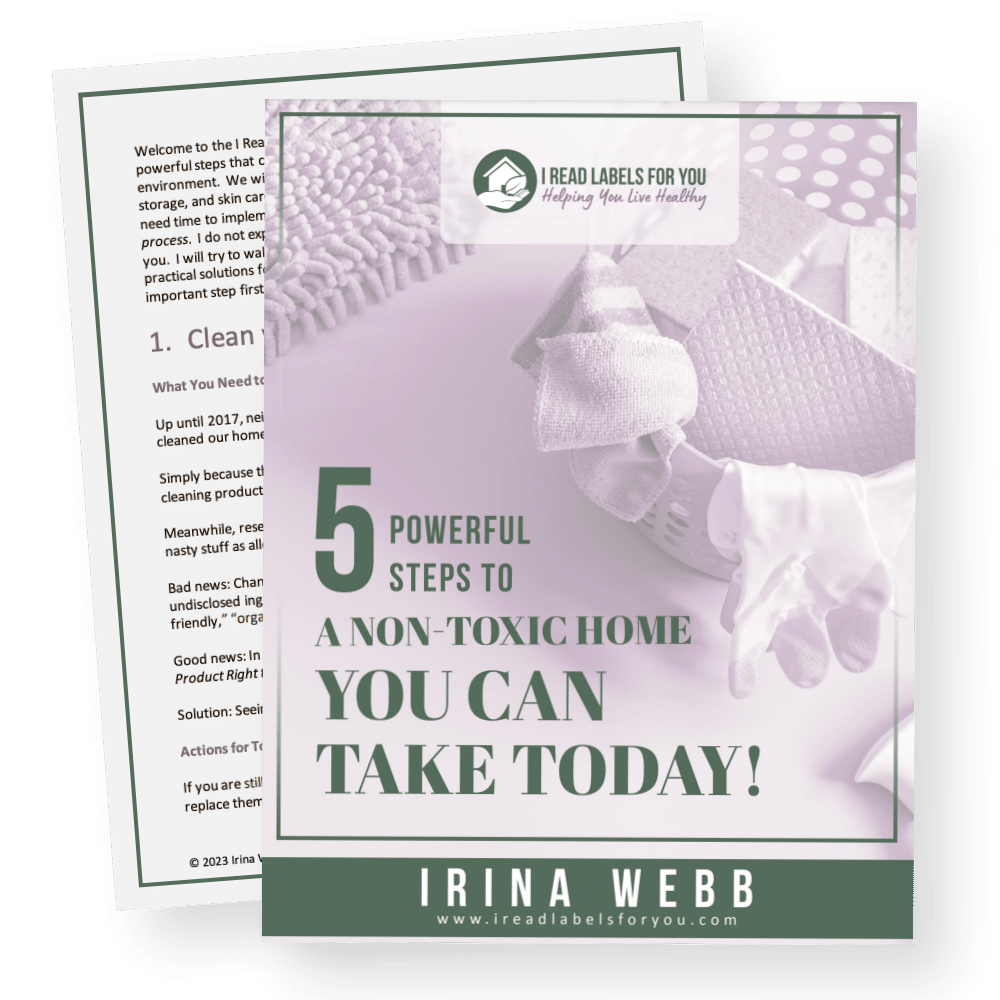
5 Powerful Steps To A Non-Toxic Home
Join our informed consumer community and get our free guide the “5 Powerful Steps To A Non-Toxic Home”.

I have also been met with the “It’s proprietary” line when inquiring about ingredients. I believe that should be illegal. The FDA accepts citizens petitions. I filed one and I suggest that you do the same. If enough people are concerned, things will change.
I have used dry shampoo in the past that has made my hair fall out. Is yours healthy for haur? Does it cause loss of hair?
Hello, Jan! We are sorry to hear about that! We did not experience any hair fall.
I never used dry shampoo and always wondered how well it work. Your EXPLANATION of things just made it so easy to understand.