
How to Buy Truly Non-Toxic Soap
 Written by Irina Webb
If you’ve ever flipped over a soap bottle and been overwhelmed by the ingredient list—or wondered whether bar soap is better than liquid—this blog post is for you. We’ll break down exactly what makes truly non-toxic soap, how to tell the difference between genuinely natural bar soap and synthetic washes, and what ingredients to avoid. Additionally, you will learn which toxic-free soap brands you can actually trust to use safe, natural ingredients. Are they Mrs. Meyer’s, Method, and ECOS? Let’s find out!
How To Buy Truly Non-Toxic Soap
To begin with, according to the FDA, true soap is made by saponification—a chemical reaction between a fat (usually oil) and an alkali (typically lye). This process creates soap and glycerin, and if no synthetic detergents are added, the result is toxic-free soap.
Many products labeled ‘soap’ are actually hand washes made with synthetic ingredients. Let’s define the difference between saponified soap and liquid detergent hand washes.
On the one hand, saponified oil soap is typically made from plant-based oils—such as organic sunflower oil, organic coconut oil, organic shea butter, and organic castor oil—combined with lye through the traditional saponification process. This type of soap, often produced in small batches, has simple, natural ingredients, is gentle on the skin, reducing the risk of skin irritation, and can genuinely be considered non-toxic.
On the other hand, most liquid hand soaps on store shelves are technically not soap—they are washes. To clarify, they are synthetic detergent-based cleansers containing surfactants, preservatives, and synthetic or natural fragrance blends. While they might smell pleasant and look appealing, they often include ingredients that can disrupt hormones or irritate the skin. This makes them incompatible with the principles of truly safe soap.
Some examples of liquid hand soaps (washes) are:
- Mrs. Meyer’s Liquid Hand Soap
- Method Gel Hand Wash
- ECOS Hypoallergenic Hand Soap
They all contain ingredients that truly toxic-fee soap will never do. (For an expert review of multiple hand soaps, refer to my Non-Toxic Hand Soap Guide.)
Ingredients A Truly Non-Toxic Soap Will Never Have
Firstly—fragrance: The term ‘fragrance (or ‘parfum’) is often a catch-all for dozens—sometimes hundreds—of undisclosed chemicals. Some of these can cause skin irritation, allergic reactions, endocrine disruption, or even be carcinogenic. Even ‘natural fragrance’ is unregulated and often includes chemical isolates like linalool or limonene, which can still be allergenic.
As of July 2025, both Mrs. Meyer’s Liquid Hand Soap and Method Gel Hand Wash list ‘fragrance’ among their ingredients, and its sub-ingredients are not disclosed. Learn more in my blog post Is Natural Fragrance Safe?.
Secondly—synthetic surfactants: Used for foaming and cleansing, they are often processed with harsh chemicals and can be irritating to skin. You will not find them in true saponified oil soaps.
For instance, as of July 2025, the formulas for Mrs. Meyer’s Liquid Hand Soap, Method Gel Hand Wash, and ECOS Hypoallergenic Hand Soap include surfactants such as cocamidopropyl hydroxysultaine and cocamidopropyl betaine. These chemicals may cause an allergic reaction due to residues of certain contaminants involved in the manufacturing process.
Lastly—preservatives: Though necessary in products formulated with water to inhibit microbial growth, they are still chemical additives.
For example, Mrs. Meyer’s Liquid Hand Soap and Method Gel Hand Wash use potassium sorbate and sodium benzoate preservatives which are considered safe in low concentrations. And ECOS Hypoallergenic Hand Soap uses phenoxyethanol associated with skin and eye irritation. Learn more in my blog post Phenoxyethanol In Skin Care.
Download The Free Guide!
5 Powerful Steps To A Non-Toxic Home
Join our informed consumer community and get our free guide the “5 Powerful Steps To A Non-Toxic Home”.
What Is Truly Toxic-Free Soap?
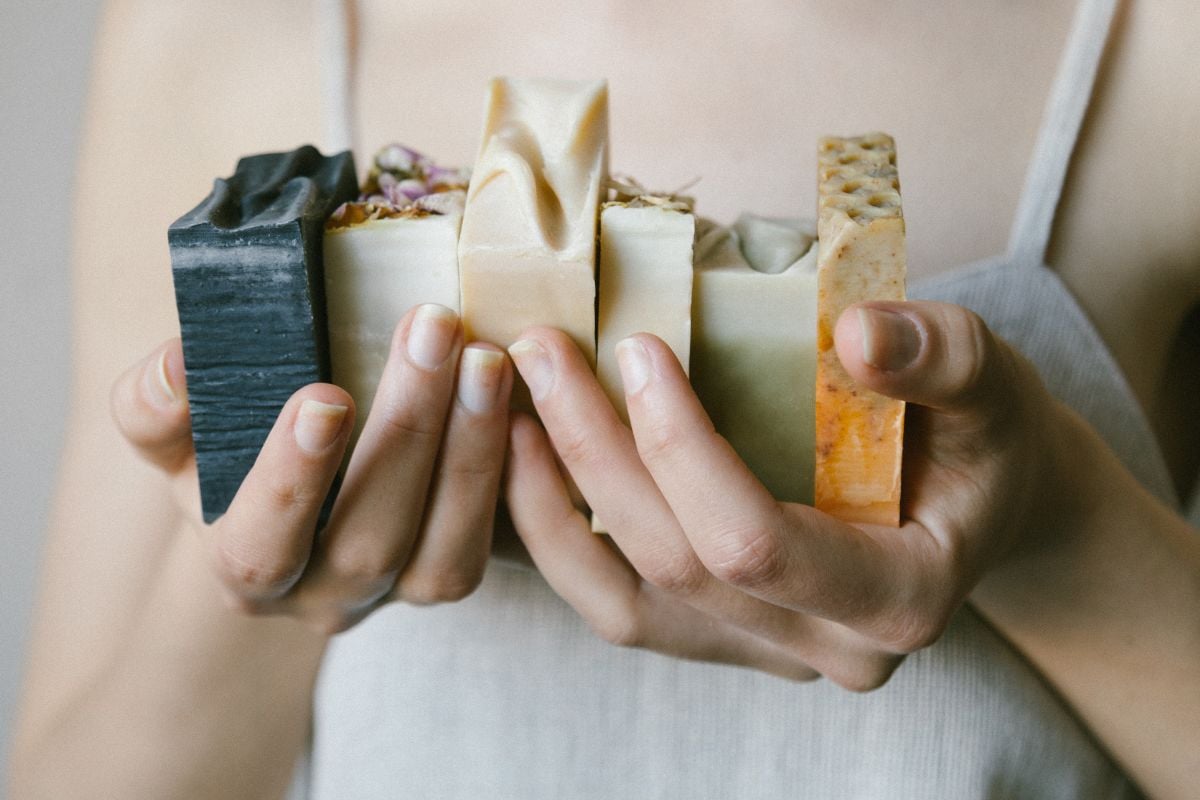
Truly non-toxic soap is most often castile soap. Originating in Spain’s Castile region, it was originally made from olive oil, water, and lye. Today’s castile soap may also include other plant-based oils like, organic castor oil, organic coconut oil, and organic sunflower oil—but the process remains the same: saponification. (For more information, refer to my blog post Natural Bar Soap – The Mystery Revealed.)
Further, castile soap can come as natural bar soap or liquid soap. It is free from undisclosed fragrances, synthetic surfactants, and preservatives. Many toxic-free soap makers craft it in small batches with organic, natural ingredients. Thus, in scented options, they use only essential oils. Note that some people can still be sensitive to essential oils. Please refer to my blog post A Helpful List of Chemicals to Avoid During Pregnancy for more information.
As for preservatives, saponified soap typically does not require preservatives due to its high pH and low water activity. The soap-making process creates conditions that naturally inhibit bacteria and mold. Specifically, the saponification process that involves reacting fats and oils with a strong alkali (like lye) results in a product with a pH level that inhibits microbial growth.
Some examples of non-toxic saponified soap include:
- MamaSuds Castile Soap
- Meliora Bar Soap
- Pure Haven Cocoa Soap
Let’s look at the ingredients of these truly non-toxic soaps made with only natural ingredients and free from harsh chemicals. (For more options, turn to my blog post 9 All-Natural Soaps You Will Love.)
MamaSuds Castile Soap
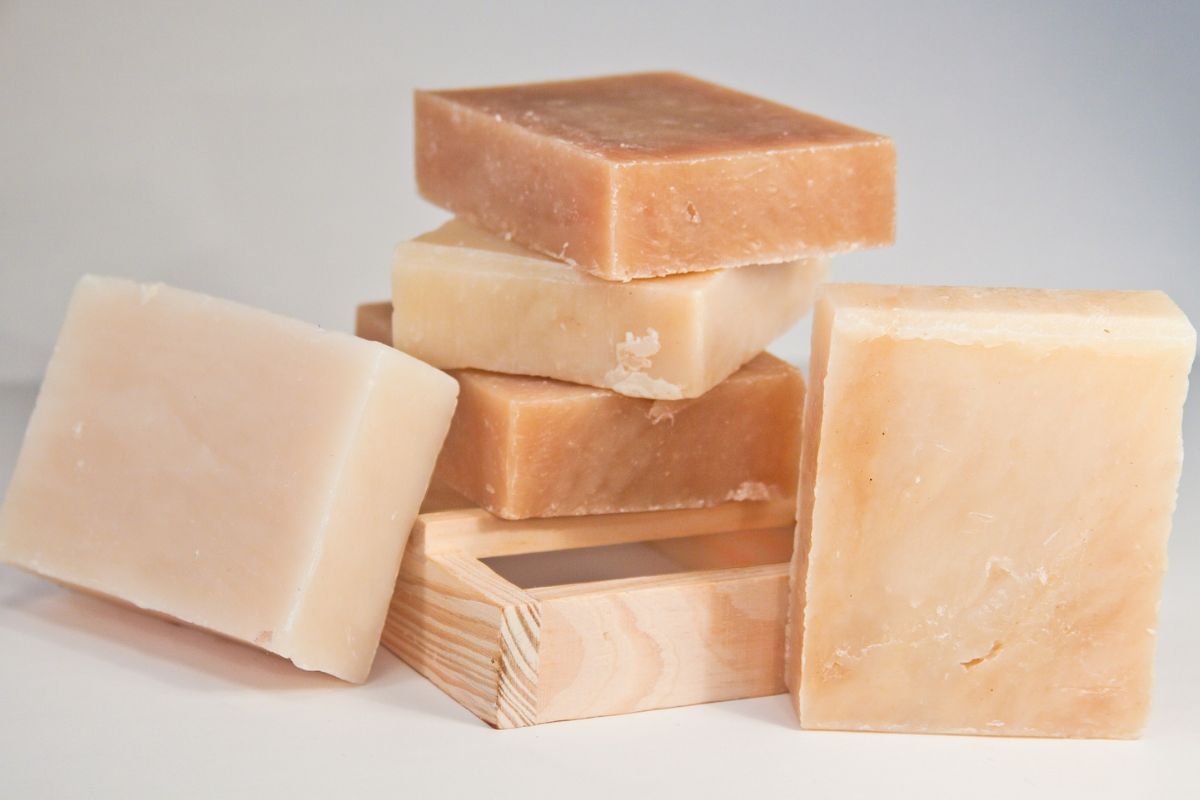
First, MamaSuds Castile Soap is a minimalist, non-toxic, plant-based formula available as bar soap and liquid soap. The ingredient list is as short as it can be—just one ingredient: Saponified Olive Oil (the liquid option also includes distilled water, and the scented ones–essential oils).
It is one of the purest forms of soap available, free of fragrance, preservatives, or any other synthetic ingredients, and is ideal for people with skin irritation or sensitive skin. (If you have sensitive skin, you will benefit from my blog post Are Serums Good For Sensitive Skin?.)
Meliora Bar Soap
Second, Meliora Bath & Body Soap Bar is a clean, plant-based formula made with organic sunflower oil and organic coconut oil. Specifically, the ingredients are as follows:
Vegetable Soap [Sodium Cocoate, Sodium Sunflowerate, Glycerin, Water, Organic Cocos Nucifera (Coconut) Oil, Organic Helianthus Annuus (Sunflower) Seed Oil].
I have used it and can say that it lathers well and is gentle on the skin.
Pure Haven Cocoa Soap
Finally, Pure Haven Cocoa Bar Soap combines multiple nourishing oils, including organic avocado oil, organic castor oil, and organic cocoa butter. It has no artificial fragrances or harsh preservatives. The ingredients are as follows:
Sodium Palmate, Sodium Cocoate, Water, Glycerin (Vegetable, Non-GMO), Persea Gratissima (Organic Avocado) Oil, Theobroma Cacao (Organic Cocoa) Seed Butter, Ricinus Communis (Organic Castor) Seed Oil, Goat Milk, Allantoin, Avena Sativa (Organic Oat) Kernel Oil, Sodium Chloride, Sodium Citrate.
This is my favorite soap! It is great for moisturizing and soothing sensitive skin, and it fits in my hand comfortably.
Conclusion: How To Buy Truly Non-Toxic Soap?
To Buy Truly Non-Toxic Soap, Look For Fragrance-Free Saponified Bar Or Liquid Castile Soap Made With Plant-Based Ingredients.
In conclusion, true toxic-fee soap is made through saponification with only natural ingredients—no synthetic surfactants, no artificial fragrance, and no unnecessary preservatives.
Avoid products that claim to be natural but include unnecessary chemical additives. Instead, choose natural bar soap or liquid castile soap made from organic castor oil, organic coconut oil, and organic shea butter, among others. Some examples of non-toxic saponified soap include:
To find non-toxic dishwashing soap, turn to my Non-Toxic Dishwashing Soap Guide.
For more information on Mrs. Meyer’s, Method, and ECOS, refer to the following blog posts:
- Mrs. Meyer’s Cleaning Products—Safe Or Toxic?
- Method Cleaning Products—Safe Or Toxic?
- ECOS Dishwashing Liquid—Safe Or Toxic?
By reading labels and learning how skincare, personal care, and cleaning products are made, you can protect your skin, avoid irritation, and support ethical companies that prioritize clean, safe ingredients.
And by choosing to receive my free emails, you’ll gain access to exclusive offers, helpful resources, and uplifting advice to support your wellness journey.
Download The Free Guide!
5 Powerful Steps To A Non-Toxic Home
Join our informed consumer community and get our free guide the “5 Powerful Steps To A Non-Toxic Home”.



Do you know of any ingredients/recipes to make bar soap of my own based on the criteria in your article? Thank you for your VERY informative article. As I was attempting to purchase a soap base from amazon, I started looking further at the ingredients in the ‘natural’ products and wasn’t very happy with what I saw. Ultimately my search led me to your sight. Thank goodness!! In any event, hence my original question.
Keep up the great work – I’m on to read your info regarding shampoo!!
Cheers,
Suzanne Fisher
Hi Suzanne! Thank you for your kind feedback! You can use one of our professional consulting services here: https://ireadlabelsforyou.com/services/
No comment. Just seaching for a non-toxic, unscented natural and breathable soap to use as an air filtering liquid to filter viruses from breathable air…
I tried the Mrs Meyer hand soap once and I found the fragrance to be so strong and and so artificial and it stayed on my hands. I couldn’t stand it. I tried diluting it into a foaming soap hand wash, but that didn’t help. I tossed it.
Thank you for letting us know, Subi! ~Irina
For the Everyone Kids Orange Squeeze soap EWG lists Limonene at a 3, not a 5-7.
I had previously been using another Everyone product and had no issues. After using the Kids Orange Squeeze for a couple of washes I started developing an ugly spotty red rash. There are a few ingredients in the Orange Squeeze that were not in the previous Everyone product and one of those was Limonene. It was also the only one that was different with a score higher than 1 so it makes me wonder if the Limonene caused the rash. EWG does list irritation for Limonene.
Finding products is difficult even with EWG because I feel like their verified products sometimes still contain ingredients that can irritate in one way or another. *sigh*
I’m sorry that had a bad rash, Rinnie. I hope it will go away quickly. EWG is a good starting point but you are right we still have to do a lot of research. Have you had a chance to read my post about EWG? https://ireadlabelsforyou.com/depths-skin-deep-database-cosmetics/ Thank you! ~Irina
What are your thoughts on original African black soap? 🙂
Is it Alaffia brand? Could you send me a link to it? Thank you, Chipo. ~Irina