
Is Phenoxyethanol Safe? A Simple Answer You Can Trust
 Written by Irina Webb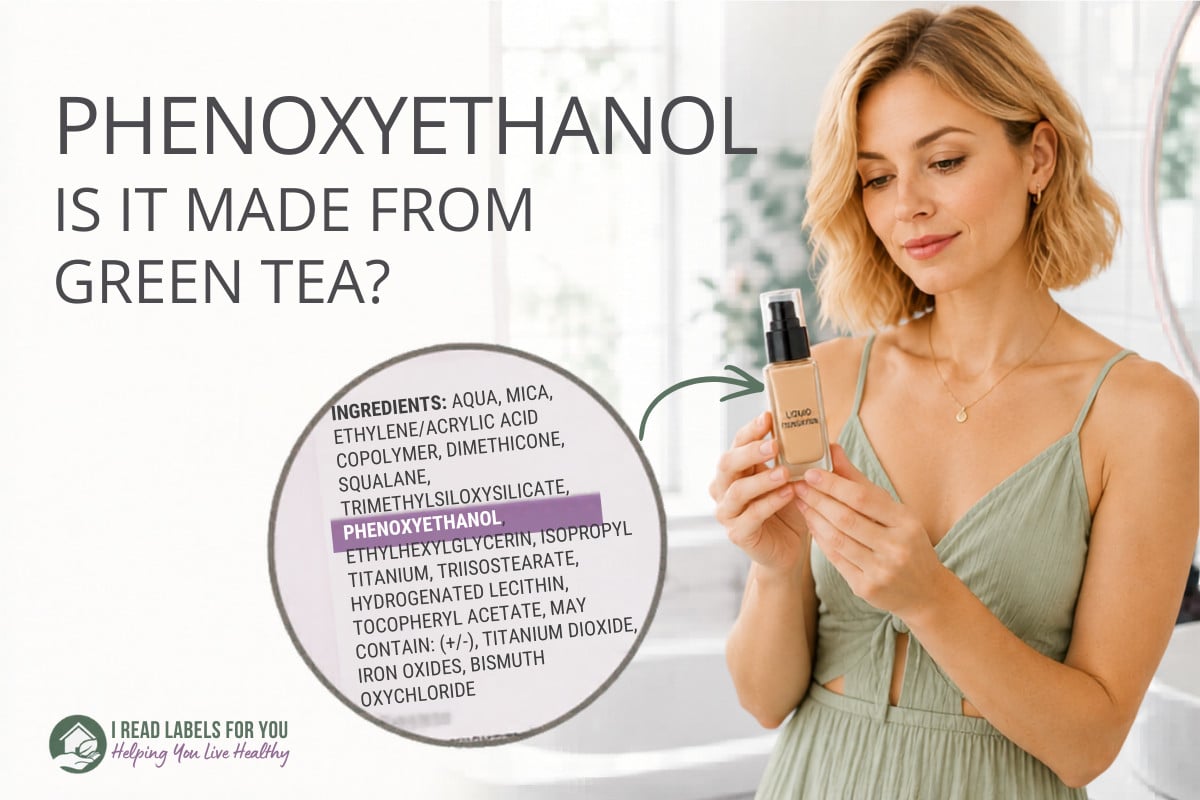
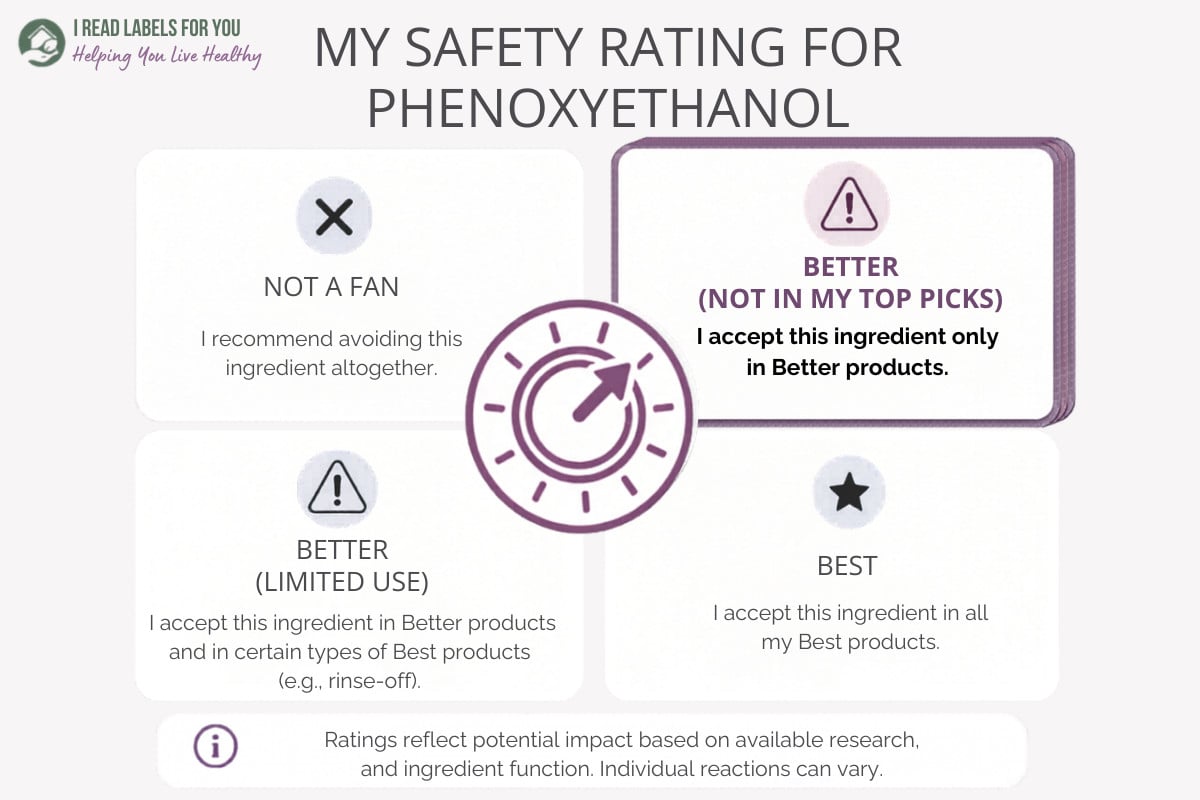
Yes, Phenoxyethanol is safe for most people at the low levels used in skincare. It’s a synthetic preservative that keeps products free of bacteria and mold. It’s made using carcinogenic ethylene oxide, it faces an ongoing EU endocrine review, and it’s a recognized allergen. For these reasons, I rate it Better (Not In My Top Picks).
While the US and Canada set no limit on Phenoxyethanol in cosmetics, the EU allows it as a preservative at up to 1%. Europe’s safety panel confirmed that limit in 2016. A rat study found that about 30% of Phenoxyethanol passes through skin, though the body clears it within days. Europe is now reviewing Phenoxyethanol as a possible hormone disruptor, at Italy’s request, with no verdict yet.
Below, you’ll find out if Phenoxyethanol is made from green tea, why it is a controversial ingredient, and whether it’s banned anywhere in the world.
What Is Phenoxyethanol?
Phenoxyethanol is a synthetic preservative found in a huge share of personal-care products. Chemists class it as an aromatic ether alcohol, and its label name is simply Phenoxyethanol. It’s not drawn from plants or minerals. Instead, it’s built in a lab to guard water-based products against germs.
What Does Phenoxyethanol Do In Cosmetics?
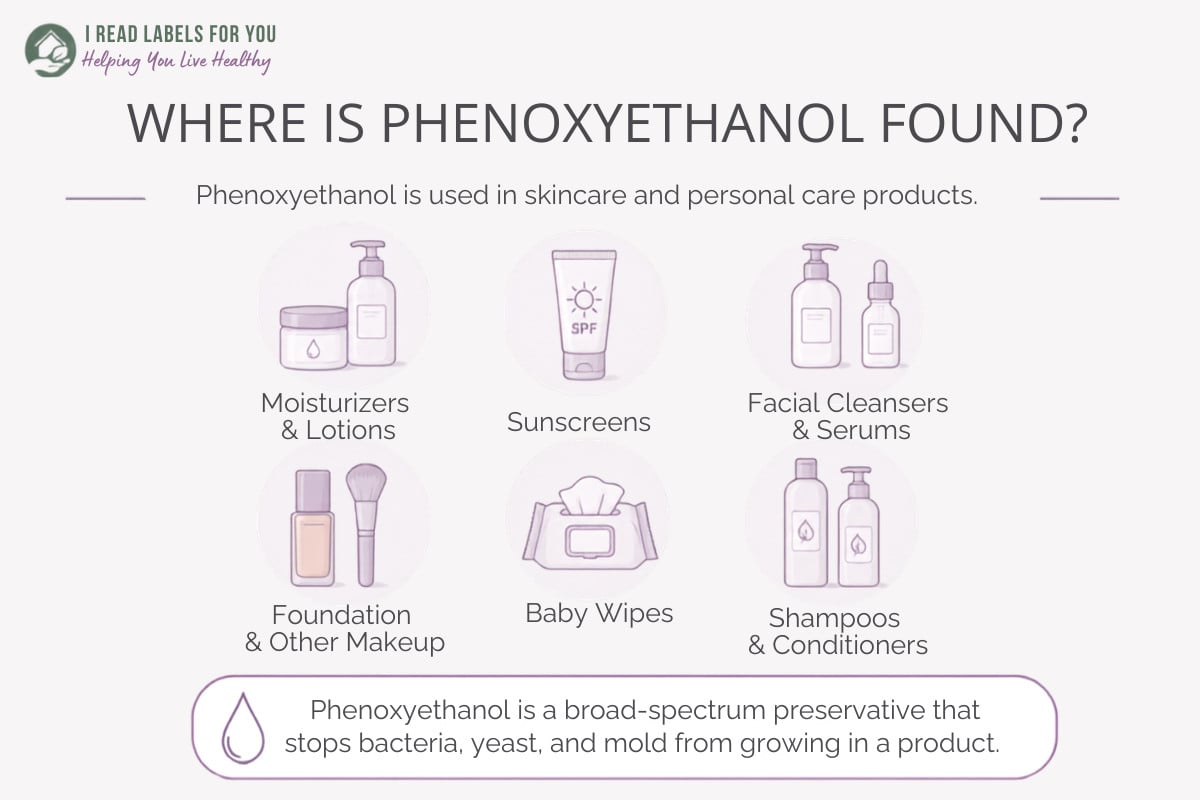
Phenoxyethanol is a broad-spectrum preservative, which means it stops bacteria, yeast, and mold from growing in a product. That protection keeps a cream or serum safe to use for months after opening.
Phenoxyethanol also works as a fragrance fixative and a solvent. Formulators use it at low levels, almost always below 1%.
You’ll find Phenoxyethanol most often in:
- moisturizers and lotions
- facial cleansers and serums
- sunscreens
- foundation and other makeup
- baby wipes
- shampoos and conditioners
Phenoxyethanol is not used in food. It carries no E-number, and you’ll see it only in cosmetics and some medicines.
How Is Phenoxyethanol Made?
Phenoxyethanol is fully synthetic, made by reacting phenol with ethylene oxide. Ethylene oxide is a known human carcinogen, so it’s the manufacturing chemical worth knowing about. Careful purification keeps any leftover ethylene oxide to trace levels. Phenol itself is not classified as a carcinogen, and the finished preservative is a clear, oily liquid.
Does Phenoxyethanol Penetrate The Skin?
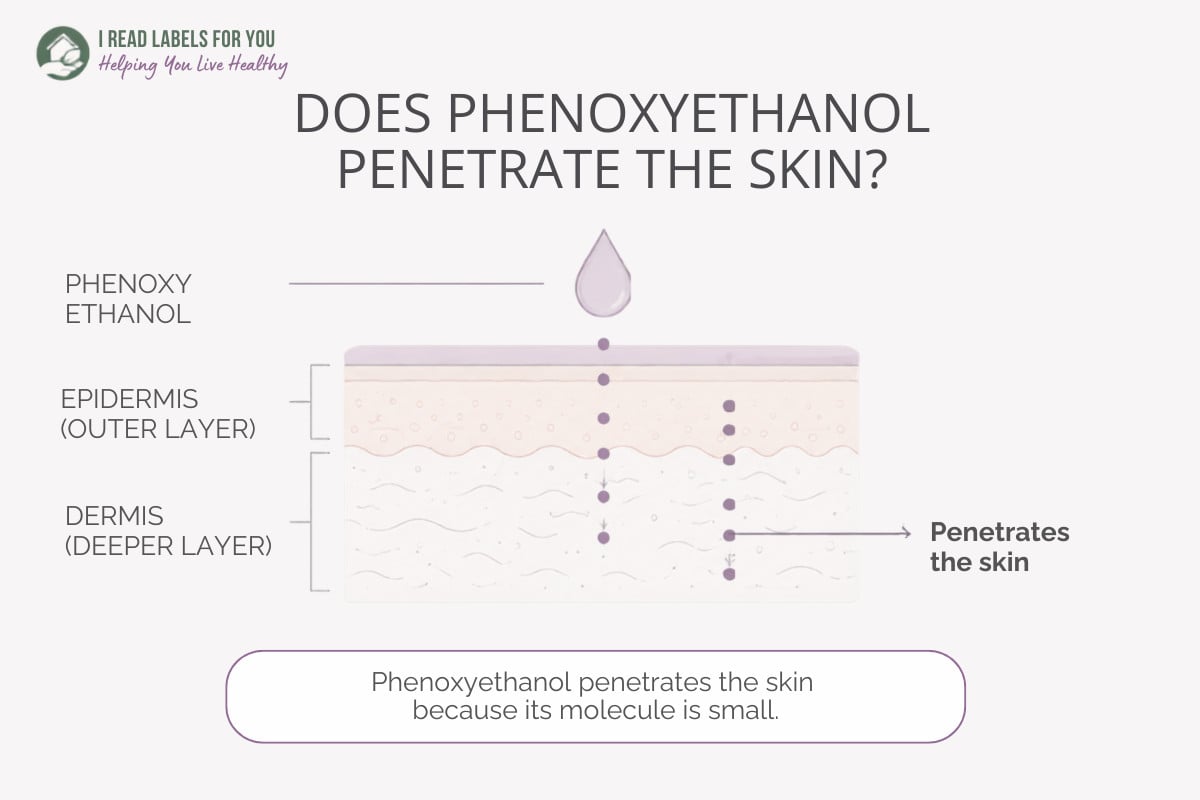
Yes, Phenoxyethanol does cross the skin to a degree, and its small size is the reason. It weighs only 138 daltons, well under the roughly 500-dalton point where size starts to block a molecule.
Phenoxyethanol is also water-loving, with a low LogP of 1.2, a measure of how much a substance prefers oil over water. One rat study measured about 30% absorption, but the body quickly turns it into phenoxyacetic acid and clears it. At the low levels used in products, systemic exposure stays small.
What Is Phenoxyethanol Called On Labels?
On an ingredient list, Phenoxyethanol, whose CAS number is 122-99-6, may appear under several names:
- Phenoxyethanol
- 2-Phenoxyethanol
- Ethylene Glycol Monophenyl Ether
- Phenyl Cellosolve
Does The U.S. FDA Restrict Phenoxyethanol In Food And Cosmetics?
The FDA sets no limit on Phenoxyethanol in cosmetics, and it’s not cleared as a food additive. That silence tells you little, because the agency has restricted only a small handful of cosmetic ingredients over the decades.
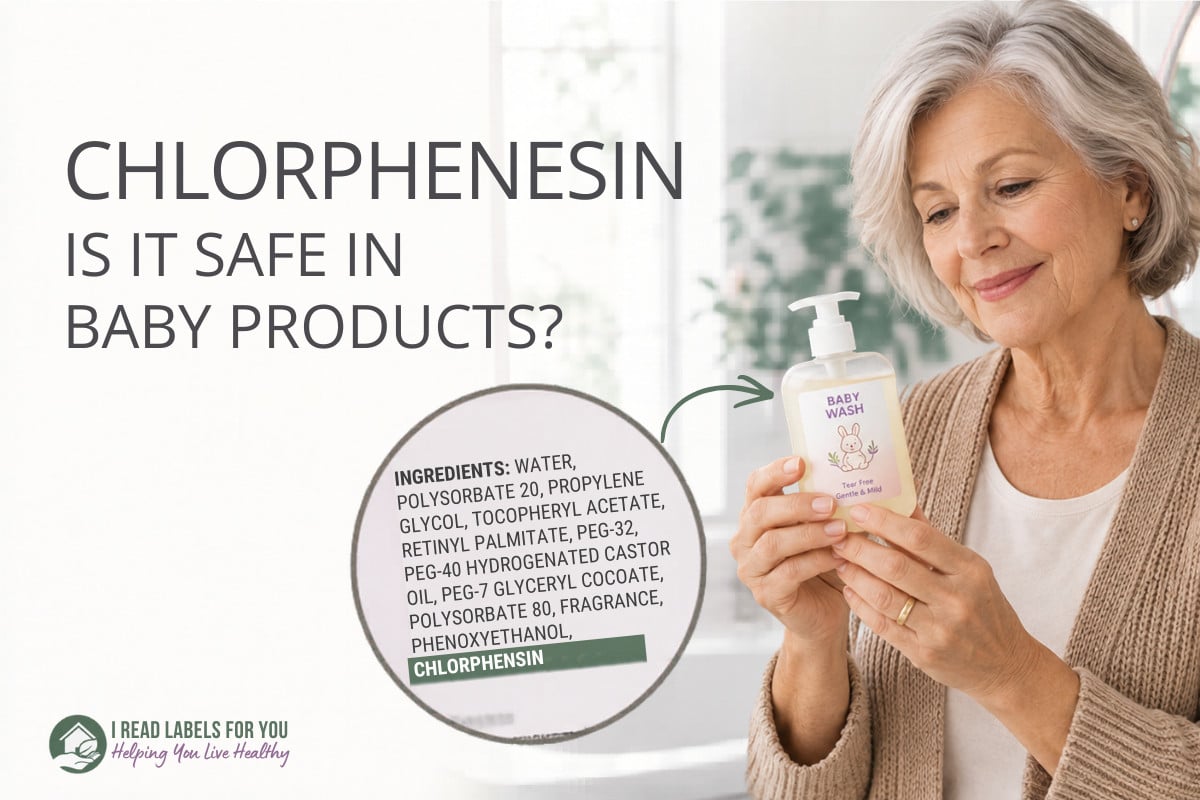
There’s one notable exception. In 2008 the FDA warned consumers against a nipple cream that contained Phenoxyethanol and Chlorphenesin. A nursing baby could swallow it directly, and both ingredients can slow an infant’s nervous system.
For a stricter starting point, it helps to look at Europe and its precautionary principle. In short, a maker must prove an ingredient safe up front, instead of waiting for harm to surface.
EU Regulations About Phenoxyethanol
The European Union allows Phenoxyethanol as a preservative under Annex V, entry 29, of its Cosmetics Regulation. It may be used at up to 1% in a finished product.
Europe’s expert panel reviewed Phenoxyethanol in 2016 and judged 1% safe for everyone, including children. Even so, France’s health agency argued the margin was too thin for very young children. France briefly required a warning on leave-on products used on the diaper area of children under three. That label rule was repealed in 2022, and the EU-wide 1% limit still stands.
Canadian Regulations About Phenoxyethanol
Canada permits Phenoxyethanol in cosmetics. Health Canada leaves it off its Cosmetic Ingredient Hotlist, the roster of banned or restricted substances. It’s also absent from Canada’s list of toxic substances under the Canadian Environmental Protection Act. In practice, Canada treats it as a routine preservative.
Can Phenoxyethanol Cause Skin Allergy And Sensitization?
Yes, Phenoxyethanol can cause skin allergy and sensitization, but true allergy is uncommon. Most people use Phenoxyethanol without any reaction, and the safety review found it did not sensitize skin in clinical testing.
That said, dermatologists do keep Phenoxyethanol on their core screening panel, and case reports describe hives and, rarely, more serious reactions. If your skin is very reactive, you can patch-test a new product first.
Is Phenoxyethanol A Hormone (Endocrine) Disruptor?
No study has shown that Phenoxyethanol disrupts hormones. Still, this is an open question rather than a closed one.
European regulators have placed Phenoxyethanol on their endocrine-disruptor assessment list, where it’s under review with no conclusion yet. That unresolved review is one reason I keep it out of my top picks.
Is Phenoxyethanol Safe To Use While Pregnant?
At the low levels used in cosmetics, Phenoxyethanol appears low-risk during pregnancy. It clears the body quickly and shows no reproductive harm in the studies reviewed.
Because pregnancy is personal, you should consult with your medical provider about products you’re unsure of. For a baby’s own skin, I lean more cautious, especially with leave-on products.
Are There Any Cancer Concerns Linked To Phenoxyethanol?
No, Phenoxyethanol itself is not linked to cancer. No health authority lists it as cancer-causing. That includes the International Agency for Research on Cancer (IARC), the U.S. National Toxicology Program, and California’s Proposition 65. It also tested negative for gene mutations.
The nuance is in how Phenoxyethanol is made. Its manufacturing partner, ethylene oxide, is a known carcinogen, so residual traces are the real concern, not the finished ingredient.
Is Phenoxyethanol Bad For The Environment?
Phenoxyethanol is not a major environmental worry. It biodegrades readily and does not accumulate in nature. Its toxicity to aquatic life is rated low at the levels released from personal-care use. On the environment, it earns a fairly clean report.
Common Claims About Phenoxyethanol: What’s True And What’s Not
Claim: Phenoxyethanol Is Banned In Europe
This is false. Europe allows Phenoxyethanol as a preservative up to 1%, and its safety panel confirmed that level for all ages. The confusion comes from France, which briefly added a warning for baby leave-on products. That rule was repealed in 2022.
Claim: Phenoxyethanol Is Dangerous For Babies
This overstates a real but narrow event. The Phenoxyethanol-related worry traces to a 2008 nipple cream that babies swallowed while nursing, and that product also contained a second nerve-slowing ingredient. Ordinary low-level use on the skin is a different situation. Even so, I stay cautious with leave-on baby products as a precaution.
Claim: Phenoxyethanol Is Made From Green Tea
There’s a grain of truth here. Phenoxyethanol does occur naturally in green tea, in tiny amounts. But the Phenoxyethanol in your products is not pulled from tea leaves. It’s built in a lab from phenol and ethylene oxide, so the green-tea version is not what ends up in your cream.
What I Think About Phenoxyethanol — And What You Should Do
Phenoxyethanol is a capable, low-toxicity preservative that most people tolerate well at the levels used in products. Even so, I keep it out of my Best products and accept it only in my Better ones.
It’s made using ethylene oxide, a known carcinogen, it sits under an unfinished EU endocrine review, and it’s a recognized screening allergen. None of these makes Phenoxyethanol dangerous. Together, though, they are enough to hold it below my top tier, and I reach for gentler preservatives, like Sodium Benzoate, when I can.
For a baby, especially in leave-on products, I’m stricter still and leave it out. If Phenoxyethanol has never bothered your skin, a well-made product that contains it is a reasonable choice.
Frequently Asked Questions About Phenoxyethanol
Why Is Phenoxyethanol Controversial?
A few things fuel the debate. It’s made with a carcinogen, it faces an EU endocrine review, and a 2008 infant warning drew notice. France’s short-lived baby-product rule added to the noise.
Is Phenoxyethanol Banned In Any Countries?
No country bans Phenoxyethanol outright. The EU and Japan cap it at 1%, and France’s brief warning label for baby leave-on products was repealed in 2022.
Does CeraVe Use Phenoxyethanol?
Yes, Phenoxyethanol appears in many CeraVe formulas as a preservative. It’s common across mainstream skincare brands, not unique to any one line.
What Are The Negatives Of Phenoxyethanol?
The main drawbacks of Phenoxyethanol are its ethylene-oxide route, the unfinished EU endocrine review, its screening-allergen status, and eye and ingestion cautions. It’s also not accepted by natural cosmetic standards.
Why Does EWG Rate Phenoxyethanol Differently?
The Environmental Working Group (EWG) scores Phenoxyethanol low, around 2 to 4, and flags skin and eye irritation. I land more cautious because I give extra weight to the ethylene-oxide route and the open endocrine review. That’s why it sits in my Better tier, not my Best.
Sources
EU SCCS / SCCP Opinions:
SCCS Opinion on Phenoxyethanol (SCCS/1575/16, adopted 6 October 2016): assessed safe as a preservative up to 1%, including for children. SCCS opinions library
Cosmetic Ingredient Review (CIR) Reports:
CIR Final Report on the Safety Assessment of Phenoxyethanol, J Am Coll Toxicol 1990;9(2):259-277: concluded safe as used; nonmutagenic and not teratogenic. Reaffirmed in the 2007-2010 re-review. CIR reports
European Union Regulatory Databases:
EU CosIng entry for Phenoxyethanol preservative; Annex V, entry 29; maximum 1%. CosIng record
CLP Annex VI / ECHA C&L: GHS signal Danger, harmful if swallowed (H302), serious eye damage/irritation (H318/H319), and possible respiratory irritation (H335).
ECHA substance record: REACH registered; on the Endocrine Disruptor assessment list (status: Ongoing); not an SVHC. ECHA activities
Other Regulators:
U.S. FDA: no restriction on Phenoxyethanol in cosmetics; a 2008 consumer warning covered a nipple cream containing Phenoxyethanol and chlorphenesin. FDA cosmetics
Health Canada Cosmetic Ingredient Hotlist: not listed. Hotlist
Environment Canada CEPA Schedule 1 (List of Toxic Substances): not listed (checked).
International Agency for Research on Cancer (IARC): not classified. IARC classifications
U.S. National Toxicology Program Report on Carcinogens: not listed (checked).
California Proposition 65: not listed. Proposition 65 list
PubChem Records (Chemistry, Identifiers, Skin Penetration, Hazard Codes):
PubChem CID 31236: molecular weight (138), LogP (1.2), identifiers, and hazard codes: PubChem record
Peer-Reviewed Studies:
Case reports of immediate-type reactions to Phenoxyethanol (contact urticaria and, rarely, anaphylaxis) appear in the dermatology literature; such reactions remain uncommon. Indexed on PubMed (e.g., PMID 39934915).
Natural Cosmetic Standards:
COSMOS-standard approved raw materials: Phenoxyethanol not listed. COSMOS database
NATRUE certified/approved raw materials: Phenoxyethanol not listed. NATRUE
Skin Allergy Resource:
American Contact Dermatitis Society (ACDS) Helpful References, including the Core Allergen Series 2020: Phenoxyethanol is listed as a screening allergen (1% pet). ACDS references
Advocacy groups:
Environmental Working Group (EWG) Skin Deep entry for Phenoxyethanol: hazard score 2 to 4, with irritation flagged. EWG Skin Deep
Last verified: 2026-07-25
Download The Free Guide!
5 Powerful Steps To A Non-Toxic Home
Join our informed consumer community and get our free guide the “5 Powerful Steps To A Non-Toxic Home”.
Before commenting, please read our Comment Policy.