
Head & Shoulders Classic Clean Shampoo Ingredients: Are They Safe?
 Written by Irina Webb
Head & Shoulders Classic Clean shampoo is not the worst option on the market—but its ingredient list raises several important questions.
If you rely on this shampoo for dandruff relief, you’re not alone. Many people choose it because it works—and because it’s widely trusted.
However, ingredient safety isn’t always as straightforward as the label suggests.
In this post, I’ll walk you through the Head & Shoulders Classic Clean shampoo ingredients, explain which ones I would personally limit or avoid, and help you decide whether this formula makes sense for your scalp and health priorities.
As always, I’m evaluating this product using my ingredient-by-ingredient research method—focused on safety, function, and real-world exposure, not fear. Let’s take a calm, practical look at what’s really inside this popular anti-dandruff shampoo.
Head And Shoulders Shampoo Ingredients
As of January 2026, ingredients in Head and Shoulders shampoo for dandruff are as follows:
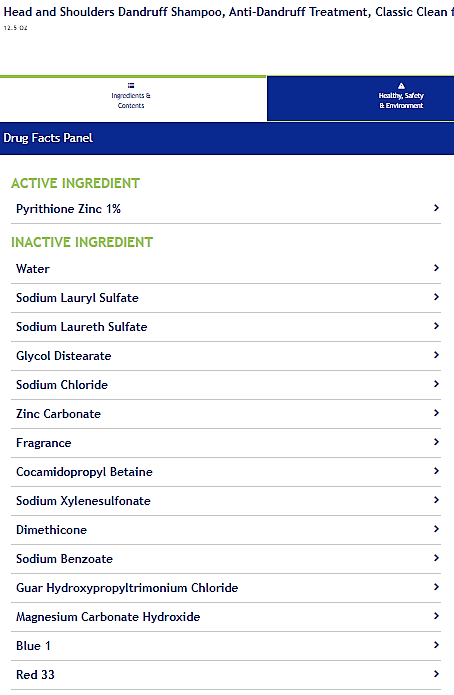
I will focus on the following ingredients that I would limit or avoid in a shampoo:
- pyrithione zinc 1%
- sodium laureth sulfate
- cocamidopropyl betaine
- fragrance
- blue 1, red 33.
Also, note that dimethicone is not recommended for curly hair as it might weigh down and flatten the curls. If you would like to learn more about the safety of dimethicone, you can do so by reading my blog post Is Dimethicone Safe.
Head And Shoulders Active Ingredient – Pyrithione Zinc
First off, pyrithione zinc, or zinc pyrithione, is common in anti-dandruff shampoos and other skincare products. It has antimicrobial, antibacterial, and antifungal properties. Reportedly, it can also be effective at treating psoriasis, eczema, and acne.
The European Scientific Committee on Consumer Safety (SCCS) considers it safe when used in anti-dandruff shampoo or other rinse-off hair care products up to a maximum concentration of 1%. In fact, the committee has not found any evidence of its carcinogenic and mutagenic potential or of its reproductive toxicity among the studies available to them (source).
Conversely, the EWG rates pyrithione zinc 6 (with 10 as “most toxic”) emphasizing its potential developmental and reproductive toxicity and referencing European Chemicals Agency (ECHA).
To clarify, the ECHA describes pyrithione zinc as toxic to reproduction and potentially damaging to the unborn child. In addition, the agency refers to this substance as causing damage to eyes and other organs through prolonged or repeated exposure. As well as very toxic to aquatic life with long lasting effects. To be fair, the ECHA does not specify the amounts or ways of usage of this substance. So, we don’t know if 1% of pyrithione zinc in a shampoo can cause all that.
Allergic Reactions To Pyrithione Zinc
Medical literature describes instances of allergic reactions to shampoos with pyrithione zinc.
Thus, this study reports that a 33-year-old man developed pruritic rash on his scalp, face, neck, and hands after using a new shampoo containing pyrithione zinc. A patch test revealed a positive reaction to pyrithione zinc and personal shampoo containing this ingredient.
Further, this study describes a case of allergic contact dermatitis in a patient who’d had stable psoriasis for 5 years and no other skin disease. Reportedly, within a week after using a shampoo containing pyrithione zinc, the patient developed severe pustular psoriasis. The patient had many lesions where the product was applied.
Similarly, this study reports a case about a patient who’d had stable psoriasis for 25 years and no other skin disease. Allegedly, within 20 days after using a shampoo with pyrithione zinc, the patient developed an aggravated scaly erythematous patch on the scalp. Simultaneously, the patient developed pustular psoriasis on both forearms. Patch testing showed a relevant sensitization to pyrithione zinc.
To sum up, while zinc pyrithione can be helpful for dandruff, it may also cause irritation or allergic reactions in some people.

Does Head And Shoulders Have Sodium Lauryl Sulfate?
For starters, every foaming shampoo must have foaming agents, also known as “surfactants.” There are three surfactants among the Head and Shoulders anti-dandruff shampoo ingredients:
- Sodium Lauryl Sulfate (SLS)
- Sodium Laureth Sulfate (SLES), and
- Cocamidopropyl Betaine.
First, Sodium Lauryl Sulfate (SLS) is a harsh cleanser that removes oils very effectively, but in doing so can dry out the hair and scalp. This often leads to irritation, brittleness, frizz, dullness, and flaking—especially for people with dry, damaged, or sensitive skin.
As for Sodium Laureth Sulfate (SLES) and Cocamidopropyl Betaine, they arouse some other concerns.
Sodium Laureth Sulfate
Specifically, Sodium laureth sulfate (SLES) is made by adding ethylene oxide to sodium lauryl sulfate (SLS). This manufacturing process is called “ethoxylation.” The problem with this process is that ethylene oxide is a carcinogen (source). If the manufacturer does not use the vacuum stripping method, 1,4 dioxane, a toxic by-product of this process, may remain in the final product. There is no way for consumers to know if vacuum stripping took place. Personally, I choose not to use or promote on my blog hair care or any other products with ethoxylated ingredients. Check out my blog post Shampoo Brands To Avoid Today for other popular shampoos that have ethoxylated ingredients.
In addition, keep in mind that ethoxylated surfactants might be stripping the hair and scalp of natural moisture too much. That’s probably why there is dimethicone in this Head & Shoulders shampoo because dimethicone moisturizes the hair and makes it shiny by coating it.
Download The Free Guide!
5 Powerful Steps To A Non-Toxic Home
Join our informed consumer community and get our free guide the “5 Powerful Steps To A Non-Toxic Home”.
Cocamidopropyl Betaine
The biggest concern with cocamidopropyl betaine is its potential to cause allergies and sensitization. Thus, the American Society of Contact Dermatitis listed it among allergens even in concentrations as low as 1%. Also, in 2004, it got a title of “Allergen of the Year” due to high rates of cases involving allergic reactions.
According to the Cosmetic Ingredient Review Panel’s report, the primary concern is related to the presence of impurities, namely DMAPA and amidopropyl dimethylamine (amidoamine), that have the potential to induce skin sensitization.
Thus, the amounts of these contaminants present in the Head & Shoulders shampoo ingredient matter a lot. I don’t have any information regarding the purity of cocamidopropyl betaine in this product.

Does Head And Shoulders Have Phthalates?
The question is legit because, as you might know, some phthalates are potential carcinogens and hormone disruptors. (Learn more in my blog post Paraben And Phthalate Free Shampoo.) One of the places where phthalates can hide in a shampoo is fragrance.
Indeed, “fragrance” is a mixture of various chemicals used as fragrance dispersants. There are literally more than 3500 varieties of fragrance ingredients for manufacturers to choose from (source)!
Fragrance mixes have been associated with allergies, dermatitis, respiratory distress, and potential effects on the reproductive system. I believe it’s a good idea to stay away from fragrances, particularly for families with babies and small children as well as pregnant women, including those planning to conceive. (If you are this woman, you will benefit from my Helpful List Of Chemicals To Avoid During Pregnancy.)
And here is an interesting detail: US law does not require that manufacturers disclose their fragrance ingredients. Much to their credit, Head & Shoulders discloses the fragrance sub-ingredients in their Classic Clean Anti-Dandruff shampoo (which is commendable):
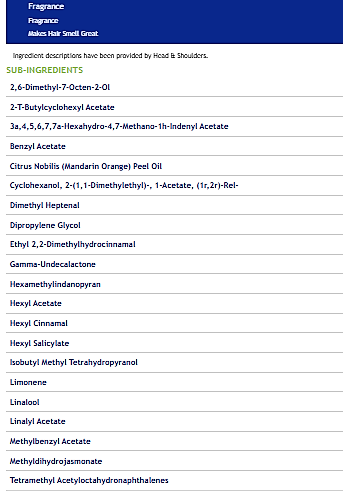
The great news is that Head and Shoulders lists no phthalates among its fragrance ingredients.
On the other hand, however, the shampoo fragrance contains potential allergens and sensitizers, namely:
- hexyl cinnamal
- limonene, and
- linalool.
You can learn more about these fragrance isolates in my post Is Natural Fragrance Safe?.

Unnecessary Harmful Ingredients In Head And Shoulders Shampoo
While the ingredients of concern discussed above are functional in shampoo, I don’t believe colorants—namely Blue 1 and Red 33—are necessary in shampoo at all. Especially when they carry potential health risks.
To start with, Blue 1 (CI 42090) and Red 33 (CI 17200) are synthetic colorants made from petroleum.
Generally speaking, colorants (or “dyes”) can be of mineral or synthetic origin and may contain traces of heavy metals, as detailed in the Code of Federal Regulations (source).
However, in addition to heavy metals, synthetic dyes may contain traces of contaminants specific to petroleum, including carcinogenic and endocrine disrupting benzo[a]pyrene and polycyclic aromatic hydrocarbons (PAHs). I talk more about that in my post Are There Heavy Metals In Makeup?. Plus, some dyes are linked to carcinogenicity, genotoxicity, and hypersensitivity (source).
Further, both Blue 1 and Red 33 are used in hair coloring products. The European Commission allows their use in hair colors at a maximum concentrations of 0.5% (source and source). I don’t have any information as to the amount of these dyes in Head & Shoulders Classic Clean shampoo.
Ultimately, how important are colorants in a shampoo? I hope Head & Shoulders will remove synthetic dyes from their Classic Clean Anti-Dandruff shampoo, just as they have removed a couple of harsh preservatives such as methylchloroisothiazolinone and methylisothiazolinone – which is applaudable.
Final Takeaway: Is Head And Shoulders Toxic?
Generally speaking, Head & Shoulders Classic Clean Anti-Dandruff Shampoo’s formulation is not the worst. Nevertheless, I would limit my exposure to this shampoo due to some Head and Shoulders ingredients that carry potential risks for allergies and sensitization such as:
- pyrithione zinc
- sodium laureth sulfate
- cocamidopropyl betaine
- fragrance, and
- blue 1, red 33.
I know that dandruff is a real issue for many people, and Head & Shoulders might be a go-to shampoo for you.
While zinc pyrithione can be helpful for dandruff, it may also cause irritation or allergic reactions in some people. I’ve noticed that for many individuals, dandruff improves simply by switching to a non-toxic shampoo and removing irritating or drying ingredients.
If you need a bit of extra support for scalp health, Pure Haven Tea Tree Shampoo & Conditioner are designed specifically for that purpose. This duo is gentle, non-toxic, and formulated to cleanse without stripping — which matters, because an overly dry scalp can actually make dandruff worse.
Tea Tree supports a healthy scalp environment and helps with flaking, itchiness, and buildup. If you’ve been dealing with persistent flakes, irritation, or an unhappy scalp, this shampoo and conditioner combo could be a helpful next step. Also, I’ve personally visited Pure Haven’s manufacturing facility and vetted all their products for safety.
To make smarter and low effort purchasing decisions, choose to receive my free emails filled with practical advice, desired discounts, and inspiration to stay motivated about your health priorities.
Download The Free Guide!
5 Powerful Steps To A Non-Toxic Home
Join our informed consumer community and get our free guide the “5 Powerful Steps To A Non-Toxic Home”.



Dear Irina Thank you for the informative article about Head Shoulders which earlier this year was recommended by a dermatologist for scalp problems. First I have to say I’m a mature lady and have some thinning going on.Within a very short time of using Head and Shoulders shampoo I started experiencing severe hair loss. Head and Shoulders accelerated yhe thinning massively. Within weeks I no have bald spots! Didn’t real8ze it was the Head and Shoulders. Worse yet I was using it sparingly only used it maybe 3x a week..it was truly shocking! And extremely sad. Quit using it and happily the fast shedding stopped. Sadly the bald spots remained. Wah wah wah! At least I know what didvit and I’d like to out the word out. Many,many years ago in my early 30’s I used Head and Shoulders Didn’t effect my hair like this. It seems if you’re already thinning Head and Shoulders Jumpstart the hair loss. I hate to blast prducts,but this deserves it,especially because I’ve seen many other comments back up what I’m saying, it’s hard for me to think the company that produces it doesn’t know.. Thank you for your excellent posts,instantly I trusted you. I send my Blessings,may you have enough success to cheer your heart,but not so much to spoil you!
Dear Joy
Thank you for sharing and your kind words and wishes! We truly appreciate it!
We are sorry to hear about your hair, but, as you mentioned, the good news is that now you know!! Blessings to you, too!!
Hi Irina,
Thank you for the note on shampoos. I avoid using shampoos as much as possible and instead use a mild bodywash or dove soap to wash my hair.
Love this 1 second method. I basically look for fragrance on the ingredients list and if it has it I don’t buy it. Now I know 2 other ingredients that are definitely on a do not buy list. Thank you!
I’m currently still searching for a good shampoo. I’ve tried Acure, Alaffia, & EO without loving any of them yet (& I’ve also only tried one type of those shampoos so maybe I need to experiment a little more). I also don’t know how clean those shampoos/conditioners truly are. I’ve been curious about Innersense & BeautyCounter’s new line of hair care. Thank you for all you do!
Thank you, Kendra, for letting me know. It is always great to hear from you. Could you tell me more why you were not impressed by Acure, Alaffia and EO? What are you looking for in a shampoo? Thanks. ~Irina
My hair feels dry with the ones I’ve tried. Looking for something that doesn’t irritate my scalp and doesn’t make my hair feel dry. I was able to only wash a couple times a week with the ones I’ve tried which I do like.
I used Head and shoulders about 5 months ago, just once, and my hair started to fall at an alarming rate, I was at a stage where I was thinking of a wig because I thought I was getting bold. The doctor said it was not alopecia, just hair loss.
I suspected Head and Shoulders so I did not use it again.
After a month or so my hair started to grow again and no shedding anymore.
I was curious to know the ingredients they use so I can check with any other shampoo that I may use in future.
It was a terrible shock to see all the hair I lost
Hi, Irina. Can’t wait for your next shampoo post. Turned out Hairprint shampoo (didn’t try the color) wasn’t for me, so I’m still looking. My hair likes Carina Organics Unscented, but my scalp isn’t 100% happy. Hope you’re doing well!
Hi, Judy: Great to hear from you! Thanks! Have a great weekend. ~Irina
Hi Judy, if you don’t mind, why didn’t you like hairprint shampoo?
Hi, Natalia. I didn’t remember, so I looked at the many emails back and forth to the company. The Fermented Bamboo made my hair look and feel dry, lifeless, dull, limp and it flattened out my natural waves. It also made my scalp itch. I’ve been using limited ingredient “natural” shampoos for years, so I don’t think it was detox. I kept at it until I almost finished the bottle. Judy
thank you Judy! this is very helpful!
What’s your opinion on Acure ultra hydrating shampoo? Here are the ingredients:
water/eau, aloe barbadensis leaf juice, euterpe oleracea (acai) fruit extract*, rubus fruticosus (blackberry) fruit extract*, rosa canina (rosehips) fruit extract*, punica granatum (pomegranate) fruit extract*, calendula officinalis (calendula) flower extract*, matricaria recutita (chamomile) flower extract*, aspalathus linearis (rooibos) leaf extract*, sodium lauroyl methyl isethionate, betaine, sodium methyl cocoyl taurate, sodium cocoyl glutamate, glycerin, guar hydroxypropyltrimonium chloride, potassium sorbate, argania spinosa (argan) kernel oil*, hippophae rhamnoides (sea buckthorn) seed oil*, tocopherol acetate, curcubita pepo (pumpkin) seed oil*, natural benzaldehyde, cinnamomum aromaticum (cassia bark) oil, ubiquinone (CoQ10), argania spinosa callus (argan) culture extract, prunus amygdalus dulcis (sweet almond) seed extract. *organic ingredient
THANKS!
Thank you, Celeste, for letting me know what you need help with. I am in a process of figuring how I can address your guys’ questions in the most effective way. Please stay tuned. ~Irina
In my research I also came across SheaMoisture Baby Head-To-Toe Wash & Shampoo. I know it’s for babies, but sometimes it’s the only way to stay away from extra ingredients in the list. I haven’t tried this one yet, but the ingredients look impressive.
Ingredients: Deionized water, decyl glycoside (sugar beets), lauroyl lactylate (palm kernel), butyrospermum parkii (shea butter)*, olea europaea (olive) fruit oil, cocos nucifera (coconut) oil*, sclerocarya birrea (marula) seed oil, aloe barbadensis leaf juice (aloe vera), persea gratissima (avocado) oil, tocopherol (vitamin E), guar, lonicera caprifolium (honeysuckle) flower (and) lonicera japonica (Japanese honeysuckle) flower extract, essential oil blend. *Certified Organic Ingredient
Lately I’ve been using NutriBiotic Everyday Nourish Shampoo. It works well and lathers very well, much better than anything I’ve tried. The ingredients look ok, just the fragrance that worries me.
Ingredients: A botanical infusion (sage, coltstool, yarrow, balm mint, chamomile, rosemary, althea, yucca, wild thyme, and horsetail in pruified water), disodium olefin sulfonate, oleyl betaine, soyamidopropylkonium chloride, polyguaternium-10, glycereth-7 cocoate, citric acid, grapefruit seed extract, panthenol, tea tree oil, glycerin, soy protein, sunflower oil, macadamia nut oil, kukui nut oil, tocopherol acetate, phospholipids, sodium benzoate, potassium sorbate, and natrual fragrance blend.
Thank you for letting me know, Natalia! This is so helpful. I will try to address this in the upcoming posts. ~Irina
Hi Irina, I would LOVE to read more about picking shampoos! I’ve been struggling to find something that cleans my hair with sufficient lather, doesn’t leave a squeaky feel and doesn’t leave my hair greasy a couple of hours after the wash (yes, a big list!).
I’ve been using Alaffia Everyday Coconut and it meets most of my criteria, but I feel like my hair doesn’t stay clean for longer than a day with it. Here are the ingredients (the only one I’m questioning is “aromatic”, not even sure what that is.
Ingredients: Zingiber officinale (ginger) aqueous extract, lauryl glucoside, saponified cocos nucifera (virgin coconut) oil*, decyl gluside, sodium chloride, cocos nucifera (coconut) water*, panthenol, aromatic, coco nucifera (copra) extract, *Certified Fair Trade by IMO.
Hi, Natalia: There was a year when I tested a ton of different shampoos on my hair. I ruined my hair back then but I learned a lot including that shampoos with saponified oils make my hair greasy. I will be talking more about that in my upcoming post. Stay tuned. Irina
that’s good to know … I might be in the same boat here.
Can’t wait for your next post about shampoos!
I’d try Hairprint, but I had an unpleasant experience with their customer service when I tried their hair color and I’m pretty stubborn 😉
I’d read about MCI/MI being bad and one of the possible reactions could be dermatitis which is funny because I’d been using Head and Shoulders to relieve my scalp itching. So I read the labels of my body washes and other shampoos and they all had it – along with various dyes!! That lead me to find your website. Thank you.
Thank you, Judy! I am so happy you found my website. ~Irina
Thank you for this post. I use the Head and Shoulders Classic Clean and now I will change. What shampoo do you use? My children and I all have very dry scalps so we have been using that product. Please do share what you use.
Hi, Lisa! I know! This is the irony of it. My husband used to use Head and Shoulders all the time before I met him and he had bad problems with his scalp. The pyrithione zinc in the Head and Shoulders is also linked with scalp dermatitis. I was using Hairprint shampoo exclusively for almost year and recently found another shampoo I like a lot. I will be publishing a post about the shampoos next week. Stay tuned. ~Irina
Irina, I look forward to that post.