Paraben And Phthalate Free Shampoo
If you’re here looking for paraben-free and phthalate-free shampoo, I just want to give you a little pat on the back. Seriously—your motivation to make better choices is something to celebrate. And you’re absolutely right to be paying attention. A lot of cosmetic products still rely on questionable chemicals to improve texture, fragrance, or shelf life. Two of the most common offenders in personal care products are parabens and phthalates.
Today, I’m sharing a round-up of paraben and phthalate free shampoo options I trust, plus clear explanations to help you understand what these chemicals are, what they do, and why avoiding them matters.
Paraben And Phthalate Free Shampoo Safety
You’re here reading this because you care about safety and transparency. That’s why I’ll be straight with you: just the fact that a shampoo is paraben-free and phthalate-free doesn’t automatically make it safe. There are plenty of other ingredients to avoid, and even the Food and Drug Administration (FDA) does not proactively regulate all ingredients before they appear in our shampoos, nail polish, lotions, or food packaging. So, while wanting a phthalate free and paraben-free shampoo is a great start, it’s just the beginning. But don’t worry—I’m here to help you avoid the stress I went through at the beginning of my own journey. If you’re looking for broader guidance, check out my blog post Shampoo Brands to Avoid Today.
What Does Paraben And Phthalate Free Mean?
To begin with, a shampoo labeled “paraben and phthalate free” means it does not contain synthetic parabens (a group of preservatives) or phthalates (plasticizer chemicals often hidden under fragrance). How significant is that?
Well, among other things, parabens and phthalates have been linked to endocrine disrupting effects that may interfere with hormones like estrogen (source and source). Consequently, avoiding them reduces your overall chemical body burden, especially because exposure to phthalates and parabens can come from many everyday sources. Indeed, numerous daily used products contain parabens and phthalates, like your shower curtain, makeup, skincare, or even the lining of food packaging.
If you’d like guidance on clean skincare and makeup, visit my blog post Non-Toxic Makeup Reviews.

What Is Paraben?
To start with, parabens are a large family of synthetic preservatives widely used in cosmetic products, personal care products, pharmaceuticals, food packaging, and even household items. Their primary job is to prevent mold, yeast, and bacteria from growing—giving products a longer shelf life. Some common parabens include methylparaben, propylparaben, butylparaben, and ethylparaben.
Thanks to improvements in modern analytical testing, researchers have now detected parabens in an astonishing range of environments—even at very tiny concentrations. Studies have found parabens in air, water sources, soil, wastewater, and, importantly, in human tissues, including breast tissue. Their widespread environmental presence is largely linked to wastewater discharges from products containing parabens (source).
Within the scientific community, the discussion continues about the full impact of parabens on human health, animals, and ecosystems. That’s understandable because parabens can act as endocrine disruptors, meaning they can interfere with our hormone system—specifically, the hormone estrogen. Hence, some studies suggest that parabens may increase breast cancer and infertility and exhibit carcinogenic potential (source).
While European regulations have banned 5 out of 9 parabens (benzylparaben, isobutylparaben, isopropylparaben, pentylparaben, and phenylparaben), the United States Food and Drug Administration (FDA) allows all of them in cosmetic products without premarket safety testing (source and source).
Because of this, it’s important to read labels closely and never assume a “clean” claim means the product is actually free of harmful chemicals.
What Does Paraben Do In Shampoo?
In shampoo, parabens primarily function as preservatives, meaning their job is to keep the product free from harmful microbial growth. Like all water-based personal care products, shampoos are highly prone to contamination from bacteria, mold, and yeast, especially once opened and stored in warm, humid bathrooms. Without an effective preservative system, even a seemingly clean product can become a breeding ground for microorganisms that may pose real health risks.
In fact, studies comparing commercial cosmetic products to laboratory-prepared creams have shown just how essential preservatives are. Research found that many creams and lotions on the market failed to meet basic microbiological safety standards, with contamination levels exceeding what regulatory agencies consider acceptable. This underscores why companies rely on strong preservatives like parabens to extend shelf life, ensure product stability, and prevent microbial growth during everyday use (source, source, and source).
In short, parabens are added to shampoos to keep the formula safe while it sits in your shower, while you scoop or pump it out, and during the entire time it’s exposed to water and air. Their antimicrobial effectiveness is one of the main reasons they became so widely used in personal care products. You can learn more about the importance of preservatives in my blog post WaterWipes Baby Wipes.
Paraben Side Effects
Recent research shows that parabens may have more health implications than early safety assessments suggested. Studies from 2005–2020 reveal that parabens are consistently detected in consumer products, the environment, and human tissues, often at measurable levels. Notably, concentrations in personal care products can reach significant amounts of the total product mass, and pregnant women tend to have much higher levels of parabens than the general population (source).
While research is ongoing, evidence indicates that parabens can act as endocrine-disrupting chemicals (EDCs), meaning they may interfere with hormone regulation and potentially contribute to long-term health concerns (source and source).
Based on the growing body of literature, here are the most commonly discussed potential side effects:
- hormonal imbalance due to estrogen-mimicking behavior
- link to breast cancer
- reproductive issues
- developmental concerns
- skin irritation or allergic reactions
- link to damaging eyelid cells producing meibum.
Because of these risks, it makes sense to avoid parabens, especially since safer alternatives exist.

What Are Phthalates?
Phthalates are a large family of industrial chemicals used to soften plastics and help formulations spread, blend, or adhere. The most common types include benzyl butyl phthalate (BBP), dibutyl phthalate (DBP), and diethyl phthalate (DEP). Because of their versatility, manufacturers add them to an astonishing range of everyday items—cosmetics, shampoos, fragrances, nail polish, food packaging, vinyl flooring, toys, medical devices, cleaning products, and even some pharmaceuticals and supplements. Yet in most cases, they do not appear on product labels.
As a result, exposure can happen in several ways. We can ingest phthalates from food that has absorbed them from packaging; we can absorb them through our skin when using personal-care products; and we can inhale them from sprays, fragrances, or household dust. Although phthalates are metabolized and excreted relatively quickly, biomonitoring studies show widespread exposure—especially among women, likely due to more frequent use of personal-care products (source and source).
What Are Phthalates Used For In Shampoo?
In shampoos and other personal-care products, phthalates serve mainly as solvents and performance enhancers. They help lubricate and stabilize the formula, so it spreads smoothly, and they also act as fixatives that make fragrances last longer. This is why you’ll often find them not only in shampoos, but in perfumes, deodorants, hair gels, lotions, soaps, and hair sprays (source and source).
However, there is an important labeling loophole to understand. If phthalates are added as part of a fragrance blend, companies are not required to list them by name. They can simply use the single word “fragrance,” even though that mixture can make up 20% or more of the product. As a result, many consumers may be using phthalate-containing products without realizing it.
For this reason, I believe it is crucial to avoid products with fragrance. You can learn more about why in my blog post on Natural Fragrance.
Phthalates Side Effects
Research shows phthalates can affect multiple organs—including the liver, kidneys, thyroid, and reproductive system—especially with long-term exposure. Both animal and human studies link phthalates to a variety of developmental, hormonal, and metabolic impacts. Also, studies show that pregnant women and young children regularly exceed health-based exposure thresholds for phthalates, highlighting why reducing exposure to products containing phthalates is so important (source, source, source, source, and source).
Key concerns supported by toxicological and epidemiological studies include:
- hormone disruption
- reproductive effects in men and women
- developmental toxicity in children
- metabolic effects (insulin resistance, type II diabetes, and obesity)
- potential links to breast cancer
- irritation of skin, eyes, and mucous membranes.
Of course, these concerns come from a combination of sources of exposure—not just shampoo. But your shampoo is something you use often and rinse into your skin and scalp, making it worth choosing carefully.

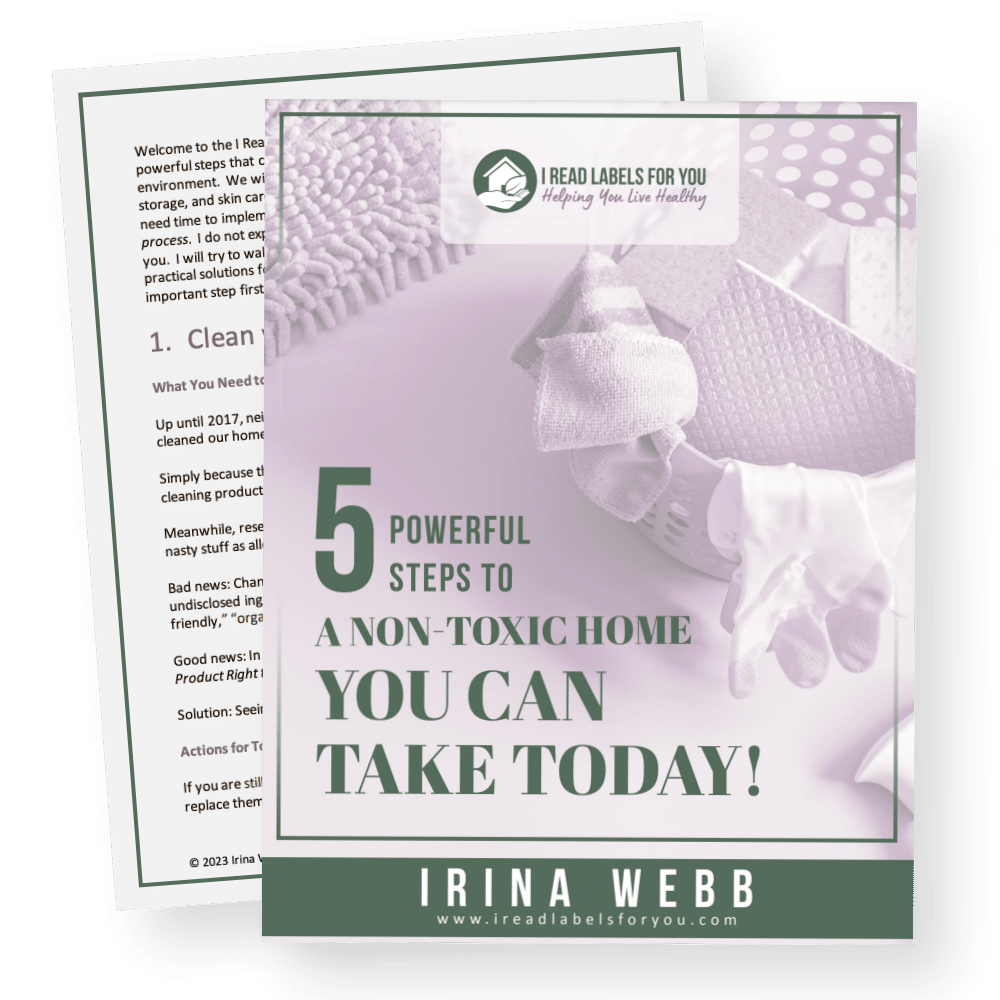
Download The Free Guide!
5 Powerful Steps To A Non-Toxic Home
Join our informed consumer community and get our free guide the “5 Powerful Steps To A Non-Toxic Home”.
What Are The Best Paraben And Phthalate Free Shampoos?
When you’re committed to avoiding parabens and phthalates—but still want a shampoo that cleanses effectively and nourishes your hair and scalp—Pure Haven stands out as one of the most reliable and thoughtfully formulated brands. Their shampoos are non-toxic, paraben-free, and phthalate-free. Indeed, they consciously avoid synthetic fragrances altogether (a common “hiding place” for phthalates). Instead, Pure Haven uses gentle, safe preservatives, and the scent comes either from essential oils or the plant extracts and oils used in the formula for nourishment.
In place of parabens, Pure Haven relies on a thoughtful blend of non-toxic, naturally derived preservatives that keep products safe without the hormone-disrupting concerns:
- Leuconostoc/Radish Root Ferment Filtrate and Lactobacillus Ferment: both probiotic-based preservatives known for their gentle yet effective antimicrobial activity.
- Levulinic Acid and Sodium Levulinate: plant-derived ingredients that inhibit microbial growth while remaining mild on skin.
- Sodium Phytate: a natural chelator often sourced from rice bran, boosts preservative performance by binding minerals that microbes need to survive.
- Citric acid: a plant-based ingredient that helps regulate pH to create an inhospitable environment for bacteria and mold.
Together, these ingredients form a clean, transparent preservation system—without parabens, or other synthetic preservatives many consumers prefer to avoid (e.g., phenoxyethanol).
Below is a breakdown of Pure Haven shampoos (PURE15) by function — and I’m confident you’ll find one that fits your hair’s needs perfectly!

Strength, Volume, & New Hair Growth
First, Pure Haven Supergreens Shampoo: This nutrient-packed formula features omega-3, kale, matcha tea, pea peptides, rosemary leaf, and aloe vera juice to support shine, hydration, volume, strength, and new growth. I’ve been using the Supergreens shampoo and conditioner for years, and they’ve helped with my naturally pigmented hair regrowth as well as with shine and volume. And if you’re looking to boost volume specifically, make sure you use the Supergreens conditioner too—it makes a noticeable difference.
Daily Use
Second, Pure Haven Sweet Orange Shampoo: Made with naturally derived cleansers, aloe vera, and sweet orange essential oil (not synthetic fragrance), this shampoo creates a refreshing, light lather suitable for everyday use. The citrus aroma comes from real plant oils—never phthalates—making it a joyful daily wash. It also includes moisturizing ingredients like glycerin to maintain softness and shine.
Deep Detox
Third, Pure Haven Charcoal Detox Shampoo: Paired with tea tree, rosemary, and peppermint oils, it provides a deep-cleaning experience without harsh detergents. Perfect for swimmers, those exposed to hard water, or anyone who uses a lot of styling products. Leaves hair feeling lighter but not dried out.
Coarse & Coiled Hair
Next, Pure Haven Curl Enhancing Shampoo: This shampoo is formulated with mongongo oil, castor oil, babassu oil, and shea and cocoa butters. It delivers moisture and enhances natural curl pattern. These ingredients help define curls, reduce frizz, and soften coarse textures. It nourishes without buildup, making it excellent for dry, thick wavy or coiled hair.
Moisture & Repair
Further, Pure Haven Honey & Fig Shampoo: Honey and fig extracts offer a combination of humectants and antioxidants that hydrate dry or damaged hair. Plus, horsetail leaf extract has astringent properties with a softening and smoothing effect on hair. With added coconut extract, aloe, and plant-based moisturizers, this shampoo helps restore elasticity and smoothness. Ideal for color-treated, chemically processed, or naturally dry hair. Additionally, it suits those with curly hair (not coarse and coiled), particularly in combination with this Curl Enhancing Serum – skip conditioner, though, to avoid heaviness and excessive greasiness.
Dry Shampoo For On-The-Go Use
Lastly, Pure Haven Dry Shampoo: A non-aerosol powder formula made with rice starch, kaolin clay, baking soda, and palmarosa and jasmine essential oils. It absorbs excess oil at the roots while adding volume—without synthetic fragrance or propellants. Excellent for busy mornings, travel, or between wash days. If you want more alternatives, see my full guide on Non-Toxic Dry Shampoo.
Conclusion: Which Paraben And Phthalate Free Shampoo Is Right For You?
The Right Shampoo For You Is One That Is Not Only Free Of Parabens And Phthalates, But Also Contains Safe And Non-Toxic Ingredients Throughout The Formula.
To sum it up, choosing a shampoo that is free of parabens and phthalates is a smart and meaningful step toward lowering your exposure to potential endocrine disruptors. Parabens and phthalates appear in countless items—from cosmetic products to food packaging to nail polish—and their roles as endocrine disrupting chemicals raise legitimate concerns. While these ingredients help manufacturers extend shelf life, improve texture, or stabilize fragrance, the potential health impacts are simply not worth it.
The products I’ve shared here offer safer alternatives without compromising performance. Whether you need detox, hydration, new hair growth, volume, curl definition, or convenience on the go, there is a Pure Haven shampoo option (PURE15) that will support both your hair and your health.
For more guidance on safer swaps, refer to my guide to the Best Shampoos Without Chemicals.
To get immediate access to valuable resources, exclusive deals, and personalized motivation, join my free email updates!

Download The Free Guide!
5 Powerful Steps To A Non-Toxic Home
Join our informed consumer community and get our free guide the “5 Powerful Steps To A Non-Toxic Home”.

Written by
Before commenting, please read our Comment Policy.