
Dimethicone In Toxin-Free Makeup: Why It’s Used
 Written by Irina Webb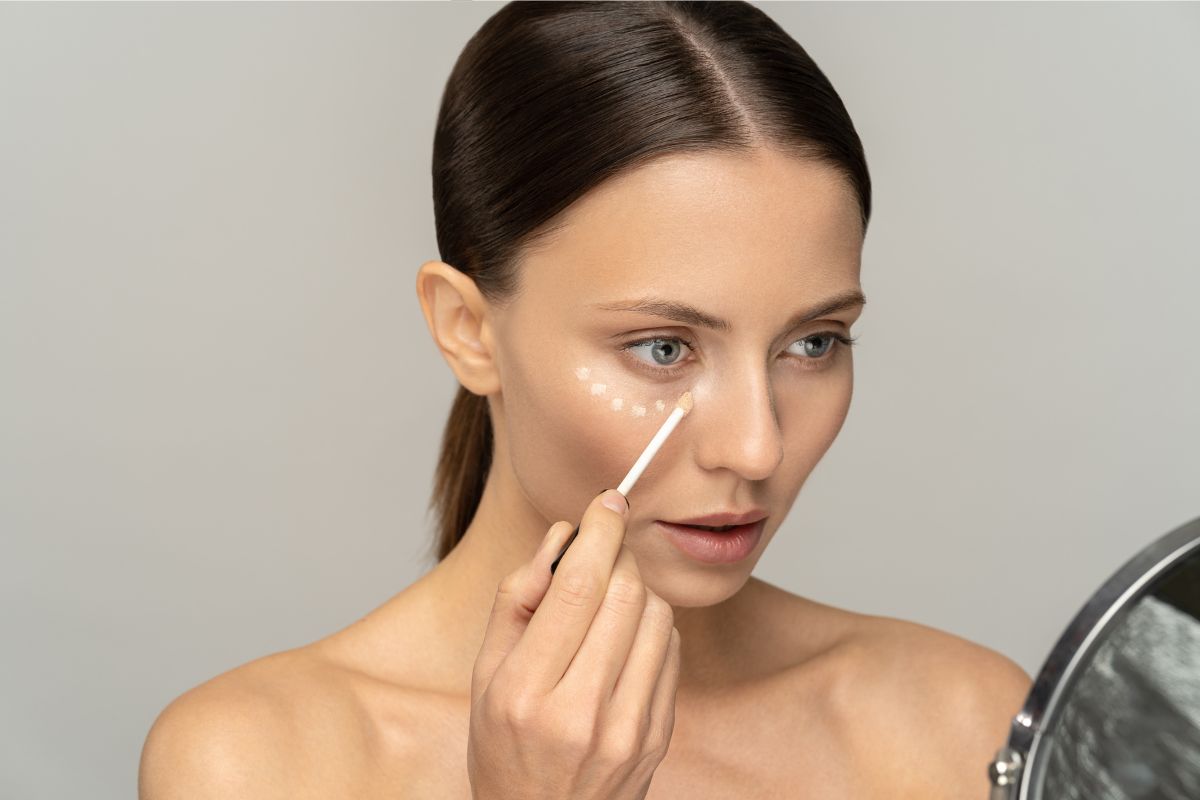
If you’ve ever applied a foundation that glided smoothly, blurred your pores, and held up throughout the day, dimethicone likely played a role. At the same time, this ingredient often raises questions in toxin-free beauty spaces. You may wonder whether dimethicone belongs in toxin-free makeup at all—or whether makeup without dimethicone is automatically a better choice.
That tension is understandable. Dimethicone delivers visible performance, yet it’s often discussed without context. Instead of approaching it with fear or blanket judgments, it helps to understand why dimethicone is used in makeup and what it actually does.
This post focuses on function, not alarm. We’ll look at dimethicone in makeup: how it acts, why makeup brands – including clean bands – rely on it, and when choosing dimethicone-free formulas makes sense for you.
What Does Dimethicone Do In Makeup?
To begin with, dimethicone is a silicone-based ingredient used to improve texture, slip, and finish. In makeup, it doesn’t treat the skin or alter its biology. Instead, it changes how a product applies and how it looks on the surface.
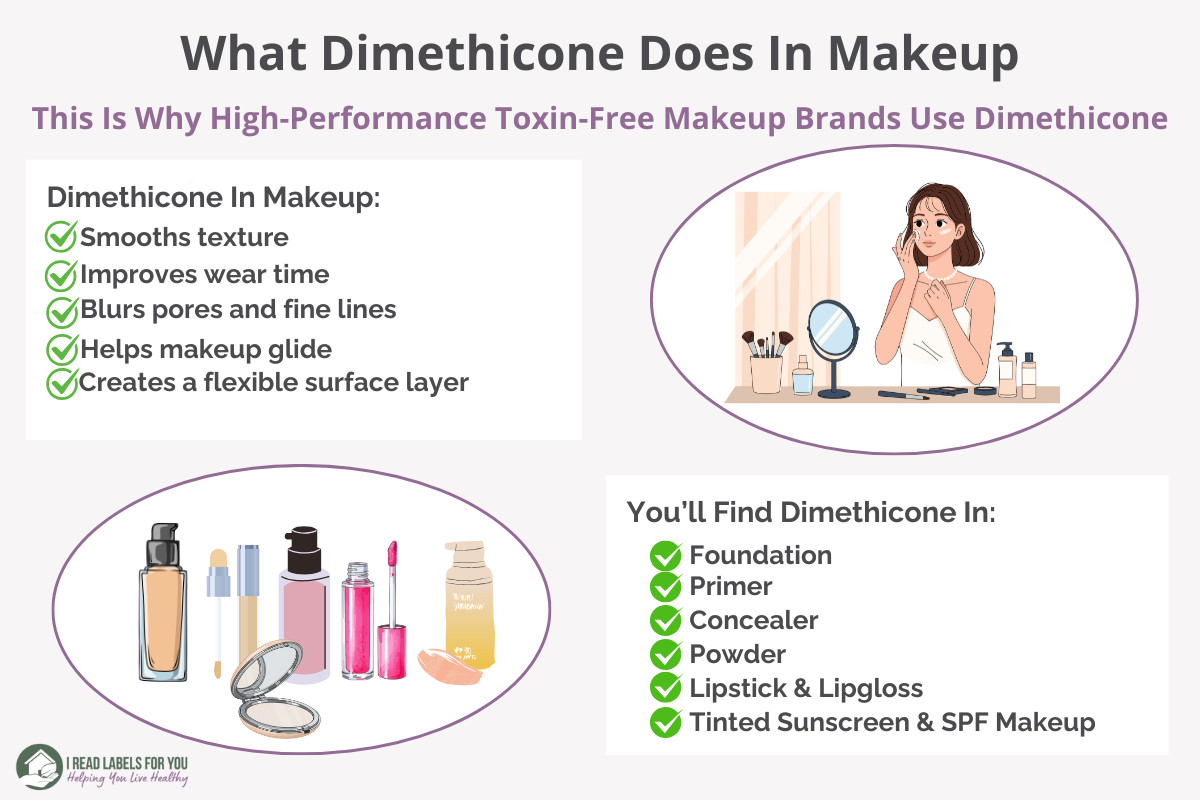
Specifically, dimethicone reduces friction, which allows makeup – like foundation and primer – to glide across the skin instead of dragging. It also temporarily fills in tiny surface irregularities, helping blur the appearance of pores and fine lines. As a result, makeup tends to look smoother and more even (source).
Importantly, dimethicone molecules are too big to penetrate the skin; hence, it stays primarily on the surface. This explains both its cosmetic benefits and its safety profile. For a detailed, science-based breakdown of dimethicone safety, please refer to my post Is Dimethicone Safe. Here, we’re staying focused on dimethicone makeup performance.
Why Dimethicone Is So Common In Makeup
For starters, makeup formulation comes with unique challenges. Indeed, pigments need to disperse evenly, textures must stay stable, and products must perform on different skin types under real-world conditions.
Dimethicone helps solve these issues by improving consistency, enhancing blendability, and supporting longer wear. That’s why you’ll find dimethicone in many complexion and color products, including non-toxic makeup.
Rather than being a shortcut, dimethicone is often a deliberate formulation choice.
Dimethicone In Foundation
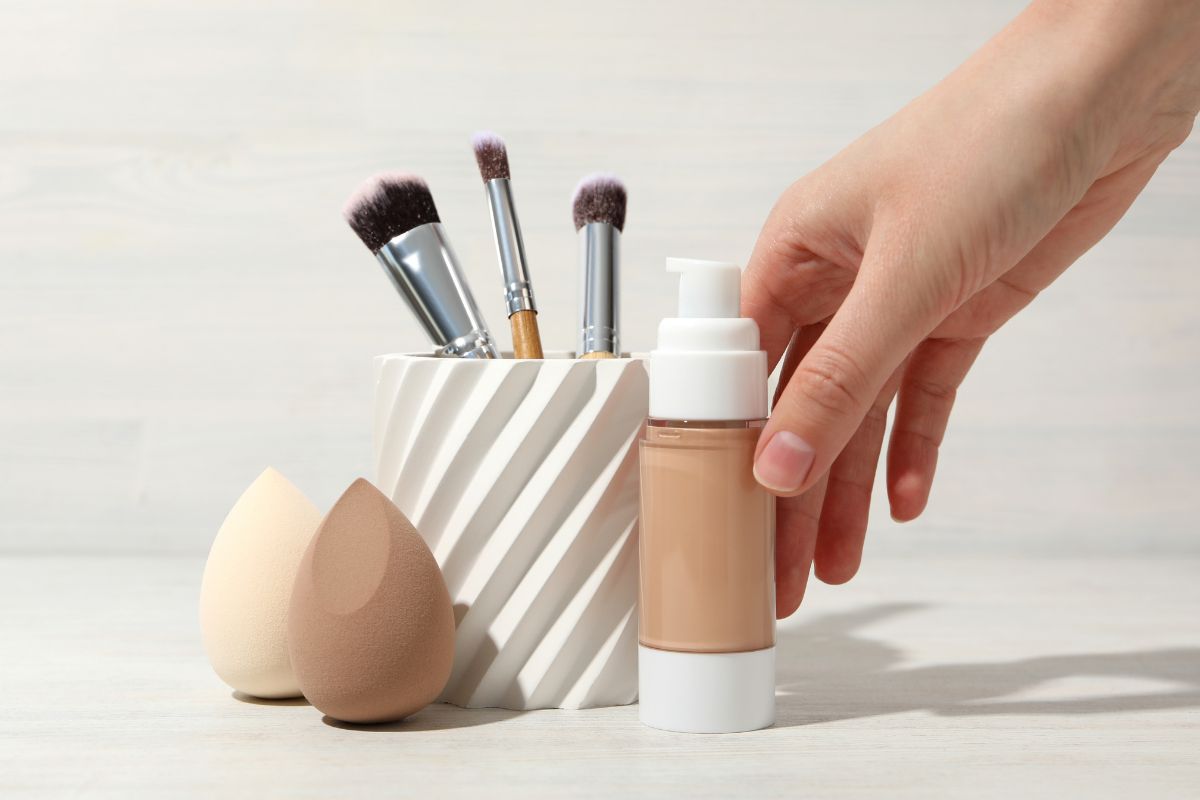
First off, dimethicone in foundation plays a particularly important role. It helps pigments distribute evenly, which reduces streaking and patchiness. It also improves how foundation sits on the skin, making it less likely to settle into fine lines as the day goes on.
This is why many dimethicone foundations feel lightweight while still delivering a polished finish. In contrast, foundation without dimethicone often relies on oils or waxes for slip, which changes both texture and wear.
Take advantage of my Clean Foundation Guide to find a high-performing, non-toxic foundation.
Dimethicone In Primers, Concealers, And Powders
Secondly, in primers, dimethicone creates that smooth, blurred base many of us look for before applying foundation. It helps soften texture without feeling heavy or greasy.
Thirdly, in concealers, dimethicone allows the product to spread evenly instead of clinging to dry areas or emphasizing fine lines. This is especially helpful under the eyes or around the nose.
Next, in pressed powders, dimethicone improves cohesion and texture, giving powders a smoother feel and more even payoff on the skin.
Dimethicone In Lipstick And Lip Products
Lastly, dimethicone in lipstick and gloss adds slip, shine, and comfort. It helps color apply evenly and prevents that thick, draggy feeling some wax-heavy formulas can create.
While lip products without dimethicone can still perform well, they might feel heavier or waxier. Again, this isn’t a matter of good or bad—it’s about texture and preference.
If you are on the lookout for a safe lip color, you will benefit from my Safe Lip Makeup Guide.
Dimethicone In Sunscreen Makeup And Hybrid Products
While dimethicone in sunscreen per se is not a necessity, sometimes, you might see dimethicone in tinted sunscreens and makeup-SPF hybrids. What it does is help mineral filters like zinc oxide and titanium dioxide spread more evenly across the skin. As a result, coverage looks smoother and more consistent, and you’re less likely to see streaks, patchiness, or that uneven “drag” some mineral formulas create.
In addition, dimethicone improves slip and flexibility, which makes these products easier to apply in a uniform layer—an important detail when you rely on makeup for sun protection. It also supports water resistance and helps the formula wear better throughout the day, especially in heat or humidity.
That said, sunscreens don’t require dimethicone to work. However, when it’s included, it often improves texture, comfort, and overall usability. And when sunscreen feels better on your skin, you’re far more likely to apply enough and reapply consistently.
Dimethicone In Makeup Vs. Dimethicone In Skin Care
First and foremost, performance evaluation approach of dimethicone in skin care should differ from that of dimethicone in makeup, and for good reason.
To clarify, skincare products are designed to deliver active ingredients that support skin health and improve skin quality over time. Ingredients like antioxidants, peptides, exfoliating acids, and barrier-supporting compounds need to interact with the skin in order to do their job effectively. While dimethicone in skincare can help seal in moisture and create a smooth, silky feel on the surface, it can also form an occlusive layer that may interfere with how well those active ingredients penetrate and perform.
In my experience, dimethicone is often used to create an immediate “wow” effect—smoother texture, blurred pores, and instant softness—without necessarily contributing to long-term skin improvement. The skin may look better temporarily, but its underlying condition often remains unchanged. For me, skincare is about supporting the skin’s function and resilience over time, not just achieving short-term cosmetic results. That’s why I choose not to use skincare products formulated with dimethicone.
On the other hand, makeup products are designed to sit on the surface of the skin and create visual effects. Because of that, the role dimethicone plays in makeup—improving texture, slip, spreadability, and finish—makes practical sense.

Download The Free Guide!
5 Powerful Steps To A Non-Toxic Home
Join our informed consumer community and get our free guide the “5 Powerful Steps To A Non-Toxic Home”.
Makeup Without Dimethicone: What Changes?
Based on my experience, makeup without dimethicone offers a different feel. Brands usually replace it with plant oils, waxes, or esters, each of which behaves differently on the skin.
I have noticed that dimethicone-free formulas—like dimethicone-free foundations—feel heavier or more emollient. They often require more blending and don’t deliver the same instant blurring effect. Besides, foundation without dimethicone or any other silicones may also break down faster, depending on the formula.
That doesn’t mean that such makeup is inferior. It simply means there are performance trade-offs you need to know.
Who Might Prefer Dimethicone-Free Foundations?
You might gravitate toward dimethicone-free foundations if you dislike that ultra-silky slip or prefer a more skin-like, natural finish. These formulas often feel more emollient and may resemble traditional creams or balms rather than fluid, “glide-on” textures.
Additionally, if you notice that certain makeup products tend to build up on your skin over time—especially when layering primer, foundation, and concealer—reducing dimethicone can sometimes make your routine feel lighter and easier to manage. In that case, choosing simpler, silicone-free formulas may help you fine-tune how your makeup wears throughout the day.
That said, these are functional and sensory preferences. They reflect how makeup feels and behaves on your skin—not evidence that dimethicone is bad for you or bad for your skin. As with most formulation choices, it comes down to how a product performs for you, not a universal rule.

Why High-Performance Toxin-Free Makeup Uses Dimethicone
High-performance makeup demands consistency. To start with, products need to apply evenly, look smooth in natural light and under artificial lighting, and hold up through long days without constant touch-ups. At the same time, they must feel comfortable on your skin and work across different skin types.
This is where dimethicone earns its place. Specifically, it helps stabilize pigments, so foundation doesn’t separate or settle unevenly. It also improves texture, which allows products to glide on smoothly instead of dragging across the skin. In addition, dimethicone enhances wear time by creating a flexible layer that helps makeup stay put without feeling heavy or greasy.
For these reasons, brands committed to toxin-free principles often use dimethicone thoughtfully and selectively. You’ll see it most often in foundations, primers, and tinted SPF—products where performance truly matters.
Alternatively, brands can resort to using oils or waxes, but this can change the finish, increase transfer, or shorten wear time.
Ultimately, makeup performance is about functionality. When an ingredient helps a product work better without introducing unnecessary risk, it can support both your expectations and your values—especially when the goal is makeup that looks good, feels good, and fits into a more mindful routine.
Final Thoughts On Dimethicone In Toxin-Free Makeup
Bottom line: Instead of asking whether dimethicone is good or bad, a better question is whether it serves your needs.
In summary, dimethicone improves makeup application, its look, and its wearability. Makeup without dimethicone offers a different feel and finish, sometimes with trade-offs in smoothness or longevity. However, neither approach is inherently better or worse. Rather, it’s about individual goals and preferences.
When you understand what dimethicone does—and why it’s used—you can choose makeup based on clarity rather than fear. That’s how ingredient education should feel: calm, empowering, and grounded in context.
For guidance on making informed and confident product choices, choose to get my free emails. There, you will find exclusive insights, helpful savings, and ongoing support for your health goals.
Download The Free Guide!
5 Powerful Steps To A Non-Toxic Home
Join our informed consumer community and get our free guide the “5 Powerful Steps To A Non-Toxic Home”.



Irina, I was introduced to a product that has several chemicals in it. Dimethicone is number 7 on the list of 26. My skin has never looked better and I’ve only been using it for six days. I apply a ‘pea-size’ to various parts of my face and body. My question is will the chemicals (Glycerin, cyclopentasiloxane, propylene glycol, dimethicone, mineral oil, and a few more) accumulate over time and be harmful to my system? I love the product but am unsure of its long term use. Thanks in advance!
Hi I know this is an older post so hopefully you are still responding to comments. What are your thoughts on cetyl dimethicone and hydrogen dimethicone? How do they compare to regular dimethicone?
Hi, Jessica, I think cetyl dimethicone is the best next to dimethicone in the dimethicone group of ingredients. As for hydrogen dimethicone, there is almost no information about its safety, and I’d need to look into it more closely. Thank you for asking. ~Irina
I’ve been using Dr. Jart+Water Fuse Hydro Sleep Mask, which has dimethicone as one of the first ingredients and I haven’t noticed any unusual breakouts (that being said, I haven’t noticed any improvement in skin’s moisture either :))
However, some hair conditioners that contain dimethicone cause me to break out around my hair line and behind ears … I can’t say for sure that it’s dimethicone, can possibly be some other ingredient, but I try to stay away from those.
Thank you, Natalia, for letting us know. You are right, it is not easy to tell which ingredient in a product causes the problem. It is also the interactions of the ingredients in the products what makes the product ultimately problematic for your skin. ~Irina
Hi Irina where can I find stay all day eye pencils crunching will have this year but not yet! Need smudge free like what I have now!
Thank you for your question! ~Irina
oh, I second that question!
I’ve been using 100% pure black pencil for years, but it looks like it might not be as great as they make it sound!
What about dimethicone in hair products? I have read that it coats the hair and can eventually cause breakage because it keeps your hair from absorbing any of the beneficial ingredients in hair product, as well it can affect your hair’s natural moisture. I have noticed since I quit using hair product with dimethicone that my hair feels/looks fuller (I think this is because it has been stripped from that silicone coating??) and a lot of my natural curl has come back. My hair just looks and feels so much healthier! Do you think some of this may have to do with no longer using dimethicone containing product?
Hi, Sheila: You are right that dimethicone coats the hair, which weights it down and possibly flattens curls. I do not use shampoos or conditioners with dimethicone. Thank you. ~Irina