
Are Parabens Safe? A Simple Answer You Can trust
 Written by Irina Webb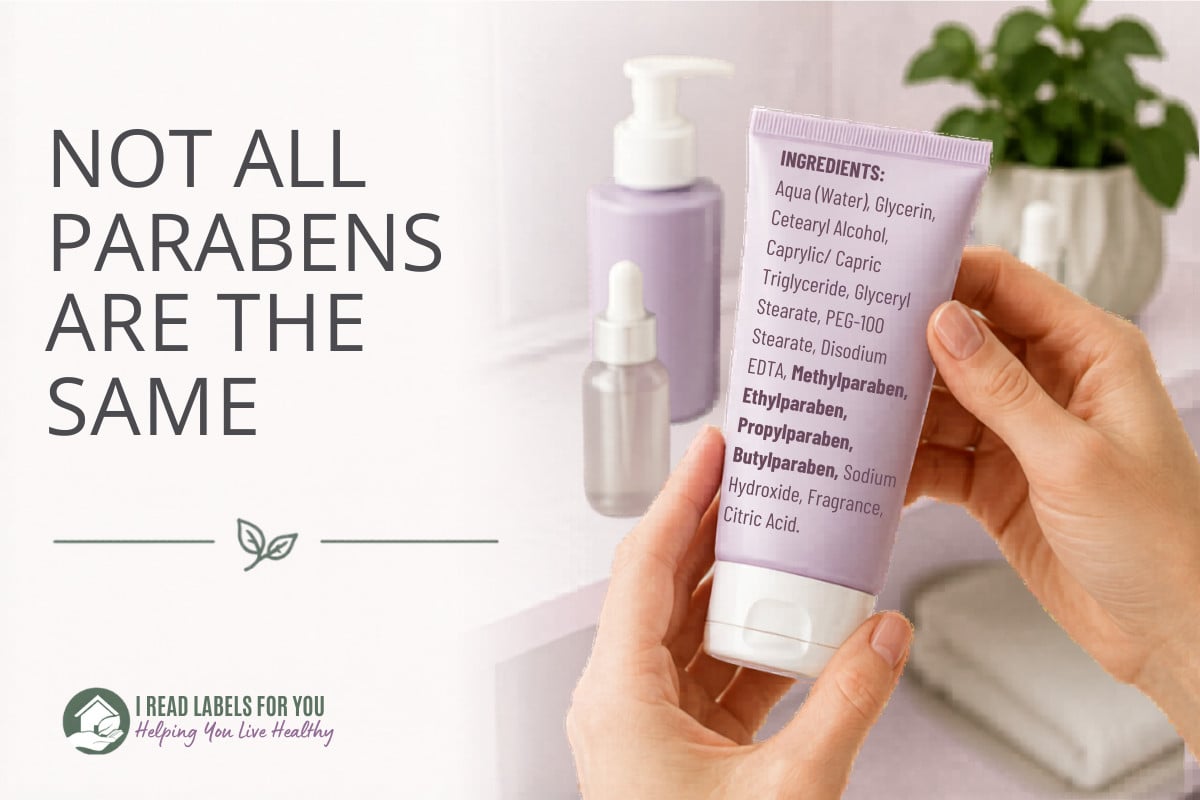
Parabens are not all the same. They’re synthetic preservatives that stop mold and bacteria from growing in products. All four pass through skin, and studies find them in the urine of nearly everyone tested. Propylparaben and Butylparaben show the strongest hormone activity, and Butylparaben sits on the EU’s list of Substances of Very High Concern. So I rate those two Not a Fan. Methylparaben and Ethylparaben show weaker hormone activity, so I rate them Better (Not In My Top Picks).
The EU limits Propylparaben and Butylparaben to 0.14% combined and bans them in diaper-area products for young children. In 2025, Europe’s safety panel said even 0.14% Butylparaben is not safe for children once all products are counted. Methylparaben and Ethylparaben are allowed at up to 0.4%.
Below, you’ll see whether parabens are linked to infertility, whether they can harm the skin, and if Japanese Honeysuckle Extract is paraben-free.
What Are Parabens?
Parabens are a group of synthetic preservatives used in cosmetics, personal care products, some foods, and pharmaceuticals.
Parabens have been used for this purpose since the 1920s.
What Do Parabens Do In Cosmetics?
Parabens prevent mold, yeast, and bacteria from growing in products that contain water. Without preservatives, products would spoil quickly and could become unsafe to use.
You may find parabens in:
- shampoo
- conditioner
- lotion
- makeup
- sunscreen
- baby wipes
- deodorants
- medicines
- food
How Are Parabens Made?
Some parabens occur naturally in food such as blueberries. However, natural occurrence at trace levels in food is different from concentrated, repeated skin exposure to synthetic parabens in cosmetic products.
The concerns I discuss in this post are about cosmetic exposure, not about eating blueberries.
Parabens used in cosmetics are made in a factory by combining naturally occurring 4-hydroxybenzoic acid with alcohols like methanol, ethanol, propanol, or butanol.
Unlike some preservatives (such as phenoxyethanol, which is made using ethylene oxide, a known human carcinogen), paraben manufacturing does not generate carcinogens or hazardous byproducts. The production process itself is not a significant safety concern.
Do Parabens Penetrate The Skin?
Yes, all four common parabens penetrate the skin and enter the bloodstream.
Two properties make parabens good at absorbing through skin:
- They are small molecules (molecular weights 152-194 Da, below the 500 Dalton threshold above which most molecules cannot pass through skin).
- Their oil-to-water balance (LogP 2.0-3.6) is in the range that absorbs best through skin. Molecules that are too water-loving can’t get into skin’s oily barrier. Molecules that are too oil-loving get stuck in it. Parabens are in the middle, which is why they pass through readily.
Parabens have been detected in the urine of most adults tested in the United States and Europe, confirming they reach the bloodstream during everyday product use.
What Are Parabens Called On Labels?
On labels, you will most often see:
- Methylparaben
- Ethylparaben
- Propylparaben
- Butylparaben
Less commonly, you may see:
- Methyl 4-Hydroxybenzoate
- Ethyl 4-Hydroxybenzoate
- Propyl 4-Hydroxybenzoate
- Butyl 4-Hydroxybenzoate
As food additives:
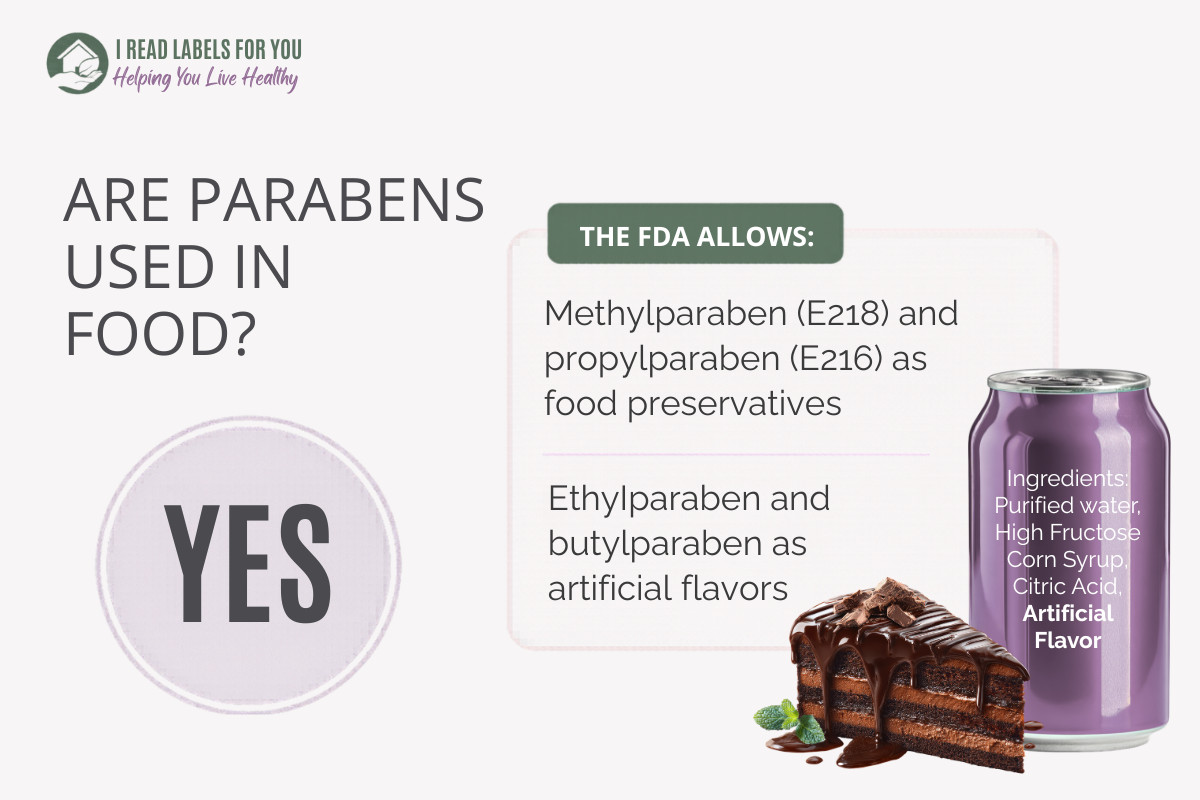
- E218 (Methylparaben)
- E216 (Propylparaben)
Ethylparaben and Butylparaben are sometimes used in artificial flavors whose ingredients are not disclosed.
Does The U.S. FDA Restrict Parabens In Food And Cosmetics?
No, the U.S. Food and Drug Administration (FDA) does not ban or restrict the four common parabens in cosmetics. However, it is important to understand that the FDA generally does not review cosmetic ingredients before products reach the market. Instead, the agency usually takes action after safety concerns are reported.
In food, the FDA allows Methylparaben and Propylparaben as preservatives. And Ethylparaben and Butylparaben, as part of artificial flavors.
EU Regulations About Parabens
The European Union takes a more proactive approach by dividing these parabens into two groups:
- Methylparaben and Ethylparaben are allowed at higher concentrations (0.4% for one or 0.8% combined) because European regulators consider them less concerning.
- Propylparaben and Butylparaben are allowed at much lower concentrations (0.14% combined) and are not permitted in leave-on diaper-area products for children under three years old.
Butylparaben receives even more scrutiny: because of its endocrine disrupting properties, it is on the EU’s Candidate List of Substances of Very High Concern.
In April 2025, the Scientific Committee on Consumer Safety (SCCS) published a follow-up opinion specifically addressing children’s exposure to Butylparaben. The SCCS concluded that Butylparaben at 0.14% in all cosmetic products is NOT safe for children aged 0.5 to 10 years when products are used in combination.
The SCCS proposed reducing Butylparaben to 0.002% in leave-on products and 0.092% in oral care products to keep aggregate exposure below the safety threshold. This is the strongest EU regulatory signal yet against Butylparaben in children’s products.
U.S. And EU Disagreements On Parabens
The U.S. and EU disagree about how strictly to limit Propylparaben and Butylparaben.
Thus, the U.S. Cosmetic Ingredient Review (CIR) panel maintains that all four parabens can be used safely within the combined concentration limit of 0.8%.
However, the EU’s combined limit for Propylparaben and Butylparaben is much lower, at 0.14%.
The EU has gone further and completely banned five parabens in cosmetics:
- Benzylparaben
- Isobutylparaben
- Isopropylparaben
- Pentylparaben
- Phenylparaben
The United States has not banned any parabens in cosmetics. This difference reflects how regulators approach uncertainty. The EU generally takes a more precautionary approach and may restrict ingredients when there are unanswered safety questions. And the FDA typically requires stronger evidence of harm before taking regulatory action. As a result, the EU has imposed more restrictions on parabens than the United States.
Canadian Regulations About Parabens
Health Canada has not banned or restricted any of the four common parabens in cosmetics. They are not included on Canada’s list of prohibited or restricted cosmetic ingredients.
Can Parabens Cause Skin Allergy And Sensitization?
Skin allergy is generally not a strong case against parabens. Surprisingly, parabens look good in this area. In fact, in their 2019 “Allergen of the Year” series, the American Contact Dermatitis Society named parabens some of the “least allergenic preservatives available.”
Are Parabens Hormone (Endocrine) Disruptors?
All four common parabens can weakly mimic estrogen in laboratory testing. However, they do not all behave the same way.
Methylparaben: The weakest hormone-related activity of the group. European regulators currently consider it safe at allowed cosmetic levels.
Ethylparaben: Similar to Methylparaben and is generally treated the same way by regulators.
Propylparaben: European reviewers concluded that the evidence is not strong enough to officially classify it as a hormone disruptor. However, the stricter EU limits remain in place.
Butylparaben: The strongest hormone-related activity of the group. The European Chemicals Agency identifies Butylparaben as a Substance of Very High Concern because of hormone-disrupting effects.
Are Parabens Safe To Use While Pregnant?
No major regulator has banned parabens during pregnancy. But the evidence raises specific concerns about Butylparaben.
The most discussed study, Boberg et al., 2016, examined parabens’ endocrine disrupting effects. The findings on Butylparaben showed reduced sperm counts and altered hormone development in male offspring of pregnant rats. This is an animal study and does not prove the same effects occur in humans. But because pregnancy is a sensitive window for hormone development, I would avoid Butylparaben specifically during pregnancy.
I would also avoid Propylparaben during pregnancy. While the evidence on Propylparaben is less specific than for Butylparaben, Propylparaben shares similar endocrine-disrupting activity, which led EU regulators to restrict it to lower concentrations than Methylparaben and Ethylparaben.
For Methylparaben and Ethylparaben, the evidence is less concerning, but I’d still minimize exposure during pregnancy as a general precaution.
Are There Any Cancer Concerns Linked To Parabens?
Currently, parabens are not classified as cancer-causing by major regulatory agencies.
The scary headline about parabens and cancer comes from a 2004 study by Darbre et al. that found parabens in breast tumor tissue. This study received a lot of attention and led many people to believe parabens cause breast cancer. However, the study did not show that parabens caused the cancer. It only showed that parabens were present. Multiple regulatory reviews have not found evidence that cosmetic use of parabens causes breast cancer.
Are Parabens Bad For The Environment?
Yes, parabens have been detected in surface water, wastewater, and aquatic life around the world. They break down relatively quickly, but they keep entering water systems because they are constantly washed down drains from personal care products.
The European Chemicals Agency (ECHA) closed its 2023 endocrine-disruptor assessment of Propylparaben with the conclusion that environmental hormone-disruption criteria are met.
In 2020, the EU added Butylparaben to the Candidate List of Substances of Very High Concern specifically for human-health endocrine-disrupting properties.
Common Claims About Parabens: What’s True And What’s Not
Claim: Parabens Cause Breast Cancer
The claim that parabens cause breast cancer is not supported by current evidence. The famous 2004 breast tumor study by Darbre et al. found parabens in tumors but did not prove they caused cancer. Multiple follow-up reviews have not found a causal link between parabens in cosmetics and breast cancer.
Claim: All Parabens Are Dangerous Hormone Disruptors
Not exactly. All parabens have some hormone-related activity, but the strength varies greatly. Butylparaben raises the most concern. Methylparaben and Ethylparaben appear less concerning.
Claim: Parabens Lower Sperm Count And Cause Infertility
True specifically for Butylparaben in lab rat studies. Whether the same thing happens in humans at real-world cosmetic exposures is still unclear.
Claim: Parabens Are Highly Allergenic
The claim that parabens are highly allergenic is false. According to the American Contact Dermatitis Society, parabens are among the least allergenic preservatives available.
Claim: Japanese Honeysuckle Extract Is Just A “Natural Paraben”
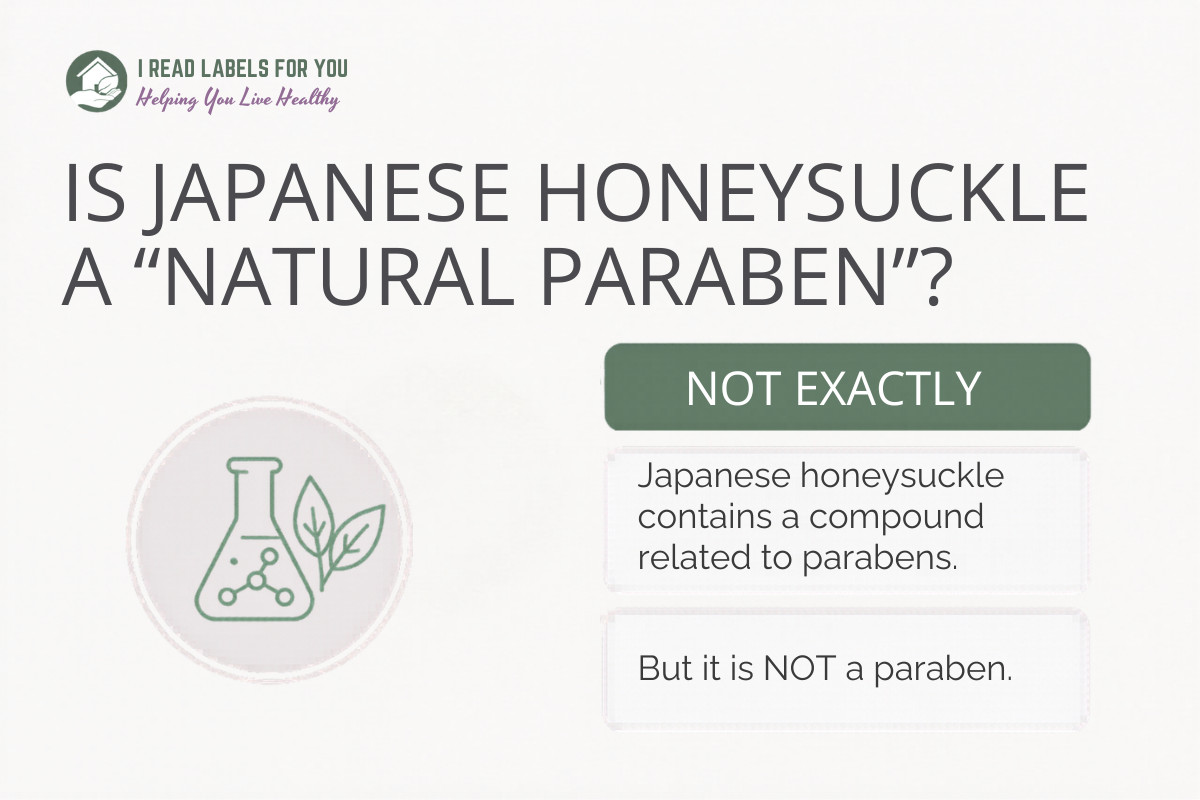
Partially true and partially false. Japanese honeysuckle contains Parahydroxybenzoic Acid (PHBA), which is the parent compound of parabens. But PHBA itself is not a paraben. Parabens are esters of PHBA created through chemical reaction with alcohol.
Pure Japanese Honeysuckle plant extract is chemically different from synthetic parabens. However, some commercial preservatives marketed as “Japanese Honeysuckle extract” may have synthetic parabens added to boost preservation, which can make a product appear paraben-free while actually containing them.
If you want to avoid parabens, look at the full ingredient list rather than relying on “paraben-free” claims. Synthetic parabens have specific names (Methylparaben, Ethylparaben, Propylparaben, Butylparaben) that should be listed if present.
What I Think About Parabens — And What You Should Do
All four parabens absorb through skin and show weak estrogen-like activity in lab studies. That hormone-like effect grows stronger as the molecule gets larger. Butylparaben is the strongest, followed by Propylparaben. Methylparaben and Ethylparaben are the weakest, which is why European regulators allow them at higher levels and treat them as the lower-concern pair.
For this reason, I rate the four common parabens the following way:
- Better (Not In My Top Picks): Methylparaben and Ethylparaben
- Not a Fan: Propylparaben and Butylparaben
To be clear, I don’t use or promote products with any parabens. In addition, products in the Better category are usually not the ones I recommend or buy for myself. It only reflects that their concerns are milder than those in my Not a Fan group.
If you want to prioritize your efforts when reading labels:
- Avoid Butylparaben first.
- Avoid Propylparaben second.
- Consider Methylparaben and Ethylparaben lower-priority concerns.
Frequently Asked Questions About Parabens
Which Parabens Are Banned?
The European Union has banned five parabens in cosmetics:
- Isopropylparaben
- Isobutylparaben
- Phenylparaben
- Benzylparaben
- Pentylparaben
The EU does not ban the four most common parabens: Methylparaben, Ethylparaben, Propylparaben, and Butylparaben. However, Propylparaben and Butylparaben are more strictly restricted.
The United States and Canada currently ban no parabens in cosmetics.
Personally, I would avoid these parabens. The fact that the EU chose to ban them is enough for me to steer clear of them, even though they may still appear in some products sold in the United States.
Why Are Propylparaben And Butylparaben Restricted In Baby Products In Europe?
Because an animal study suggested they may affect the developing reproductive system of male babies, there is a restriction on the use of Propylparaben and Butylparaben in any leave-on product designed for the diaper area of children under three.
Are Parabens Harmful To Skin?
For most people, parabens are not harmful to skin. Skin allergy rates are very low. The bigger concern is what happens after parabens are absorbed into the body.
Why Do So Many Products Say “Paraben-Free” When Methylparaben Seems Generally Cleared?
Consumer demand pushed many brands to remove all parabens, not just the more concerning ones. Marketing came faster than science. However, “paraben-free” does not automatically mean “safer” because replacement preservatives can have their own concerns.
Sources
EU SCCS / SCCP opinions on parabens (chronological):
SCCP/0874/05 Extended Opinion on parabens, underarm cosmetics and breast cancer (adopted 28 January 2005) — https://ec.europa.eu/health/ph_risk/committees/04_sccp/docs/sccp_o_00d.pdf
SCCP/1017/06 Opinion on parabens (adopted 10 October 2006) — https://ec.europa.eu/health/ph_risk/committees/04_sccp/docs/sccp_o_074.pdf
SCCP/1183/08 Opinion on parabens (adopted 24 June 2008) — https://ec.europa.eu/health/archive/ph_risk/committees/04_sccp/docs/sccp_o_138.pdf
SCCS/1348/10 Opinion on parabens (adopted 14 December 2010, revision 22 March 2011) — https://ec.europa.eu/health/scientific_committees/consumer_safety/docs/sccs_o_041.pdf
SCCS/1514/13 Opinion on parabens — updated request on propyl- and butylparaben (adopted 3 May 2013) — https://ec.europa.eu/health/scientific_committees/consumer_safety/docs/sccs_o_132.pdf
SCCS/1623/20 Final Opinion on Propylparaben (adopted 30-31 March 2021) — https://health.ec.europa.eu/system/files/2022-08/sccs_o_243.pdf
SCCS/1651/23 Final Opinion on Butylparaben (adopted 26 October 2023) — https://health.ec.europa.eu/system/files/2023-11/sccs_o_275.pdf
SCCS/1652/23 Final Opinion on Methylparaben (adopted 14 December 2023; corrigendum 28 February 2024) — https://health.ec.europa.eu/document/download/eb3192aa-089c-4fcf-8cac-b34892dd0b3e_en?filename=sccs_o_276_final.pdf
SCCS/1674/25 Final Opinion on Butylparaben — children’s exposure (adopted 30 April 2025) — https://health.ec.europa.eu/document/download/453366da-0b79-48f6-963e-648f8c176000_en?filename=sccs_o_296.pdf
Cosmetic Ingredient Review (CIR) reports on parabens:
Elder R.L. (ed.) (1984). Final Report on the Safety Assessment of Methylparaben, Ethylparaben, Propylparaben, and Butylparaben. Journal of the American College of Toxicology 3(5):147-209 — https://journals.sagepub.com/doi/10.3109/10915818409021274
Andersen F.A. (ed.) (2008). Final Amended Report on the Safety Assessment of Methylparaben, Ethylparaben, Propylparaben, Isopropylparaben, Butylparaben, Isobutylparaben, and Benzylparaben as used in Cosmetic Products. International Journal of Toxicology 27 Supplement 4 — https://journals.sagepub.com/doi/10.1177/109158180802704s01
Cherian P., Zhu J., Bergfeld W.F., et al. (2020). Amended Safety Assessment of Parabens as Used in Cosmetics. International Journal of Toxicology 39(Supplement 1):5S-97S — https://journals.sagepub.com/doi/full/10.1177/1091581820925001
CIR safety assessments index — https://cir-reports.cir-safety.org
European Union regulatory databases:
EU CosIng entries (search by ingredient name) — https://ec.europa.eu/growth/tools-databases/cosing/
EU CosIng Annexes (II, III, IV, V — full text of bans, restrictions, and listings) — https://ec.europa.eu/growth/tools-databases/cosing/reference/annexes
CLP Annex VI Harmonised Classifications (legally binding EU hazard classifications) — https://echa.europa.eu/information-on-chemicals/annex-vi-to-clp
ECHA Candidate List of Substances of Very High Concern (butyl 4-hydroxybenzoate added 25 June 2020 for human-health endocrine disrupting properties) — https://echa.europa.eu/candidate-list-table
Other regulators:
FDA on Parabens in Cosmetics — https://www.fda.gov/cosmetics/cosmetic-ingredients/parabens-cosmetics
Health Canada Cosmetic Ingredient Hotlist (parabens not listed) — https://www.canada.ca/en/health-canada/services/consumer-product-safety/cosmetics/cosmetic-ingredient-hotlist-prohibited-restricted-ingredients.html
IARC List of Classifications (parabens not classified) — https://monographs.iarc.who.int/list-of-classifications
PubChem records (chemistry, identifiers, skin penetration, hazard codes):
Methylparaben — PubChem CID 7456 — https://pubchem.ncbi.nlm.nih.gov/compound/7456
Ethylparaben — PubChem CID 8434 — https://pubchem.ncbi.nlm.nih.gov/compound/8434
Propylparaben — PubChem CID 7175 — https://pubchem.ncbi.nlm.nih.gov/compound/7175
Butylparaben — PubChem CID 7184 — https://pubchem.ncbi.nlm.nih.gov/compound/7184
Scientific studies (full text behind paywall; abstracts freely available on PubMed; each study reviewed in the SCCS/CIR/SCCP opinions cited above):
Darbre P.D., Aljarrah A., Miller W.R., Coldham N.G., Sauer M.J., Pope G.S. (2004). Concentrations of parabens in human breast tumours. Journal of Applied Toxicology 24(1):5-13. PMID: 14745841 — https://pubmed.ncbi.nlm.nih.gov/14745841/ (reviewed in SCCP/0874/05, 2005)
Boberg J., Taxvig C., Christiansen S., Hass U. (2010). Possible endocrine disrupting effects of parabens and their metabolites. Reproductive Toxicology 30(2):301-312. PMID: 20381602 — https://pubmed.ncbi.nlm.nih.gov/20381602/ (reviewed in SCCS/1446/11, 2011)
Boberg J., Axelstad M., Svingen T., Mandrup K., Christiansen S., Vinggaard A.M., Hass U. (2016). Multiple endocrine disrupting effects in rats perinatally exposed to butylparaben. Toxicological Sciences 152(1):244-256. PMID: 27122241 — https://pubmed.ncbi.nlm.nih.gov/27122241/ (reviewed in SCCS/1651/23, 2023 and CIR Paraben 2020)
Moos R.K. et al. (2016). Metabolism and elimination of methyl, iso- and n-butyl paraben in human urine after single oral dosage. Archives of Toxicology 90(11):2699-2709. PMID: 26608183 — https://pubmed.ncbi.nlm.nih.gov/26608183/ (reviewed in SCCS/1652/23, 2023)
Skin allergy resource:
American Contact Dermatitis Society (ACDS) — Helpful References (including Core Allergen Series 2020) — https://www.contactderm.org/resources/helpful-references
Last verified: 2026-06-03
Download The Free Guide!
5 Powerful Steps To A Non-Toxic Home
Join our informed consumer community and get our free guide the “5 Powerful Steps To A Non-Toxic Home”.
Before commenting, please read our Comment Policy.