
Toxic Chemicals In The Food System: A New Study Reveals Trillions In Hidden Costs — And What You Can Do Today
 Written by Irina Webb
When I first started researching ingredients back in 2012, I knew chemicals in everyday products were a problem — but even I didn’t expect to see numbers this staggering. A new report, Invisible Ingredients: Tackling Toxic Chemicals In The Food System from the Grantham Foundation, The Institute of Preventative Health, and SystemIQ has just quantified something many of us have sensed for years: toxic chemicals in the global food chain are costing nearly $3 trillion every year in healthcare costs and environmental damage.
This number alone underscores the enormous economic cost of toxic chemicals. And the story doesn’t stop with dollars. These exposures are shaping our health, fertility, ecosystems, and the long-term well-being of future generations. Importantly, the global study on toxic chemicals emphasizes that solutions already exist and are not only feasible but also highly cost-effective.
Let’s break this down clearly and calmly—so you can understand what’s happening and what actually helps.
Toxic Chemicals In The Food System
Specifically, the report focuses on four most relevant and toxic chemical groups that most people encounter daily, often without realizing it.
Four Chemical Groups Doing The Most Harm
These four chemical groups – phthalates, bisphenols, pesticides, PFAS– appear at every step of the food system and even as contamination in soil, water, and air. And because many of them bioaccumulate and cross the placenta, exposures begin before birth.
Phthalates
First, phthalates are a large group of chemicals that manufacturers use to soften materials, especially PVC plastic. In the food system, they show up in food packaging and food-processing equipment. Outside of food, companies add phthalates to PVC flooring, toys, footwear, upholstery, medical devices, and even some cosmetics and personal care products. In fact, strong scientific evidence links phthalates to reproductive toxicity and endocrine disruption.
Bisphenols
Second, bisphenols — including BPA, BPS, and BPF — form a large class of endocrine-disrupting chemicals known for their reproductive toxicity. Not surprisingly, manufacturers produce them in massive quantities. Companies use them to coat food and beverage cans, jar lids, bottle tops, plastic containers, reusable water bottles, food-storage items, and plastic utensils. Notably, “BPA-free” often just means the product contains a chemical cousin with similar concerns. Additionally, industries also rely on bisphenols in electronics, sports equipment, adhesives, and textile and leather finishes.
Pesticides
Third, pesticides are a diverse group of chemicals created to kill living organisms, and farmers spray them directly on crops. Companies also use them to treat seeds, preserve food after harvest, and fumigate soil and water. Beyond agriculture, pesticides show up in disinfectants and mosquito-control programs. Studies link certain pesticides to higher risks of cancer, genetic damage, skin and respiratory sensitization, endocrine disruption, and reproductive harm.
PFAS – “Forever chemicals”
Fourth, they are a very large of chemicals, about 15,000 to be precise. PFAS health risks include cancer, reproductive harm and endocrine disruption. Because PFAS don’t break down and bioaccumulate, their long-term effects on human health and the environment are especially concerning. Yet, they are used in so many things. In food packaging, they use them in grease- and water-repellent coatings. In processing food equipment, they utilize them for grease and water exposure. Even some pesticides contain them. Non-stick cookware is still very common use of them. Further, the non-food applications include textile, outdoor gear, firefighting foam, and electronics.

True Cost: Nearly $3 Trillion A Year
One of the most striking insights from the study on toxic chemicals in the food system is the financial burden of these exposures:
- $1.4–$2.2 trillion in annual healthcare costs
- $640+ billion in environmental damage, from cleaning PFAS out of water to agricultural losses
- Combined 3–4% of global GDP in total avoidable costs
This is the real, measurable economic cost of phthalates, bisphenols, pesticides, PFAS— costs we all pay through healthcare spending, reduced productivity, and ecological harm.
Every region is affected. Wealthier countries regulate more strictly, but their populations have had longer historical exposure. Lower-income regions often have fewer protections. No one is spared.
Hidden Crisis: Fertility & Reproductive Health
If there is one finding that made me step away from my computer and take a breath, it’s this: without intervention, the world could see 200–700 million fewer births between 2025 and 2100 due to chemical-related infertility.
The report draws a direct line between toxic chemicals and fertility, showing that phthalates, bisphenols, pesticides, and PFAS disrupt hormone signaling, impair egg quality, reduce sperm counts, and influence fetal development. These impacts begin in utero and accumulate across a lifetime.
While fertility treatments can offset a portion of this loss, scaling them globally at the level required would cost $26–79 billion per year — and that doesn’t account for the emotional and physical challenges of treatment.
Indeed, this data is sobering, but it also reinforces something I’ve been teaching for years: reducing chemical exposure matters, especially during key developmental windows.

Good News: Solutions Already Exist!
I believe that despite the scale of the problem, the global study on toxic chemicals is surprisingly hopeful. It finds that proven policies and safer technologies could reduce harm by up to 70%, saving up to $1.9 trillion annually.
For example, in the EU, 42% of PFAS use could be phased out by 2030, and 95% by 2040 at a cost of $1 to mitigate $100 of damage from PFAS. Similarly, $3.50 could mitigate $100 of damage from pesticides.
Doing the right thing isn’t just possible — it’s economically smart.
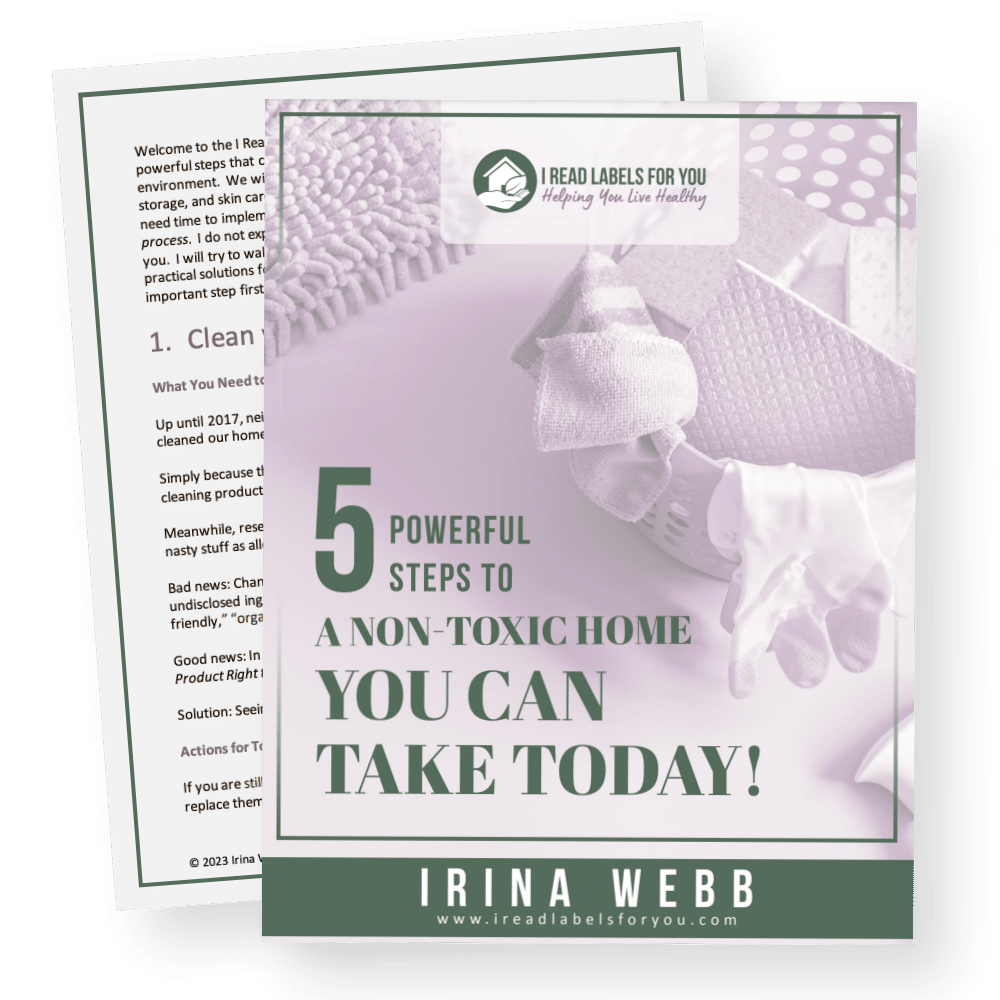
Download The Free Guide!
5 Powerful Steps To A Non-Toxic Home
Join our informed consumer community and get our free guide the “5 Powerful Steps To A Non-Toxic Home”.
What You Can Do Today Without Feeling Overwhelmed
My philosophy hasn’t changed. We reduce exposure wherever we can so we strengthen the body to stay healthy, even when we inevitably encounter chemical exposures we can’t control. Our bodies are truly remarkable — built to heal, adapt, and protect us — and they simply need the right support.
That support always starts with the basics: eating organic, nutrient-dense food, getting consistent restorative sleep, managing stress in ways that truly calm the nervous system, and moving our bodies regularly. When we pair these fundamentals with mindful reduction of everyday chemical exposures, we give our bodies the best possible chance to thrive.
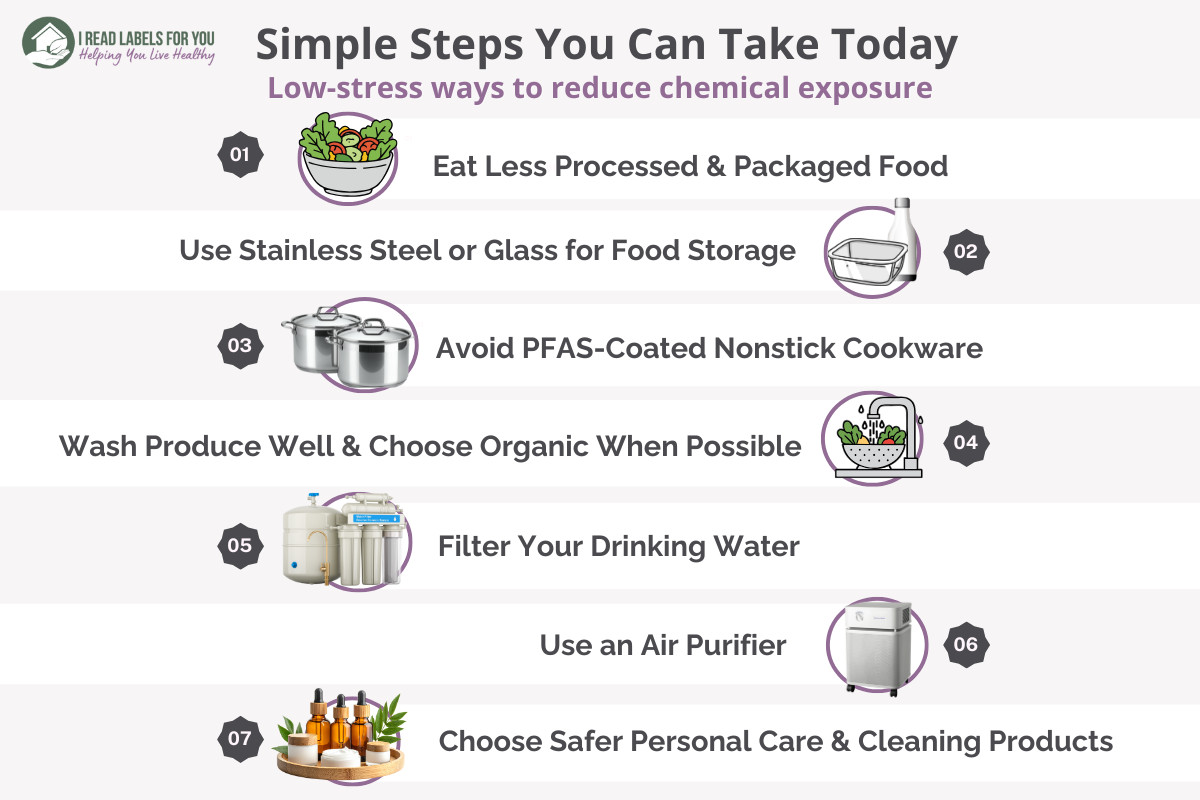
Other powerful steps include the following.
Eat Less Processed & Packaged Food
First, fast food is especially notorious for toxic packaging, and it’s also far from being nutritious. While we can’t eliminate packaged foods entirely, we can make smarter choices to reduce exposure. For example, when I don’t have time to soak and cook beans, I buy Eden Organic canned beans — they use a safer can lining than most brands.

Use Stainless Steel Or Glass For Storage
Second, a small switch that makes a meaningful difference—using glass containers instead of plastic ones. At the very least, avoid heating food in plastic because heat dramatically increases chemical leaching. For a large collection of stainless steel or glass containers, visit the food storage section of my Amazon storefront.
Avoid PFAS-Coated Nonstick Cookware
Third, at the very least, avoid Teflon-coated cookware. After all my research into ceramic non-stick pans, I’ve decided they’re not the right fit for me either. Even if we assume the coatings are safer, they simply aren’t economical because they wear down over time.
Instead, I stick with stainless steel, cast iron, and glass for cooking and baking. They’re safe, durable, and once you learn a few simple techniques, stainless steel can perform almost like non-stick.
For more practical information on that, take a look at my Safe Cookware Guide.
Wash Produce Thoroughly And Choose Organic When Possible
Fourth, at the very least, buy organic the 12 dirty dozen, determined by the Environmental Working Group. Thankfully, there is a practical way to lower pesticide residues in the produce you buy. Specifically, this study found that soaking vegetables in 1% baking soda solution (2 tsp per 4.5 cups of water) for 15 minutes can completely remove pesticides, much better than washing in tap water or a bleach solution.

Filter Your Drinking Water
Next, out of phthalates, bisphenols, pesticides, PFAS, water filtration is especially important for reducing PFAS health risks as well as pesticide reduction. Importantly, the best water filter is one that reduces contaminants in your drinking water. That’s why I highly recommend Clean Water Revival team of experts who will determine your contaminants and customize water filtration system based on your needs.
Improve Your Air Quality
Furthermore, many toxic chemicals make their way into our bodies simply through inhalation. In fact, research shows that indoor air can be 2–5 times more polluted than outdoor air, and in some cases, even up to 100 times worse. Wild, right?
The good news is good ventilation makes a big difference. Simple, doable steps can help: step outside more often, open windows when weather allows, and avoid trapping stale air inside.
Moreover, if you’re ready for a high-impact upgrade, I have a few air purifiers I trust and use. They will make a meaningful difference in reducing your chemical exposure at home.
Choose Safer Personal Care & Cleaning Products
Lastly, it’s a good idea to use non-toxic personal care and cleaning products because your exposure isn’t only through food. Please visit the shop section of my website for the options I vetted for safety.
And remember: perfection is impossible and even counterproductive because it causes stress that prevents our bodies to detoxify.
By the way, after I had my son, I became extremely careful, stiving to eliminate every possible chemical exposure. I meant well, but in the end, that level of pressure contributed to a life-threatening health crisis driven by financial and emotional stress. That experience changed my outlook on healthy living.
Today, I’m no longer an extremist. I focus on living fully, joyfully, and with balance. I still reduce exposure where it matters, but I refuse to let fear run my life.
Interestingly, this more balanced approach has served me well: I was recently tested and found to be biologically 12 years younger than my chronological age!
If you’re curious how I got there and want to follow along with what I’ve learned, you can access my email here.
Why Regulations Still Matter
For starters, individual choices matter, but they must go hand-in-hand with systemic change. In fact, reducing exposure on your own can feel overwhelming, expensive, and frankly unfair. Ideally, families shouldn’t have to spend extra money on organic food, specialty products, water filters, and air purifiers just to protect themselves from chemicals that never should’ve been allowed in the first place.
While personal action absolutely helps — and I’ll always teach practical, stress-reducing steps you can control — meaningful progress requires government and industry to do their part. Stronger regulations, safer materials, and accountability at the manufacturing level would make it easier and more affordable for everyone to live healthier lives, not just those who have the time, resources, or knowledge to dig through research.
So yes, we reduce exposure where we can. But we also need systemic shifts that stop harmful chemicals at the source. This global study on toxic chemicals is an important reminder that the burden shouldn’t fall solely on consumers — it’s time for policy makers and businesses to step up, too.
The study calls for:
- binding phase-out timelines for high-risk chemical groups
- group-based restrictions, not one-at-a-time bans
- stronger enforcement, especially in global supply chains, and
- independent safety reviews before chemicals enter the market.
This is the level of action needed to protect families at scale.
Conclusion: What Simple Steps Can Help You Tackle Toxic Chemicals?
Choose Organic, Nutrient-Rich Meals, Prioritize Real Rest, Manage Stress Effectively, Stay Active, And Consistently Minimize Everyday Chemical Exposure By Filtering Water, Purifying Air, Using Safe Food Storage, And Choosing Non-Toxic Personal Care And Cleaning Products.
To sum up, the report on toxic chemicals in the food system validates what many of us have known instinctively for years — that certain chemicals are doing more harm than regulators have acknowledged, and that the costs are far greater than most people realize.
But the global study on toxic chemicals also shows that meaningful change is within reach.
We aren’t powerless. We aren’t helpless. And incremental steps — both at home and at the policy level — truly do make a difference.
My commitment, as always, is to help you reduce exposure in ways that feel empowering, evidence-based, and doable, without tipping into fear or perfectionism.
If you want to explore safer products or learn more, the search bar on my website is a great place to start. I’m here to help guide you every step of the way. And if you’d like extra help choosing safer products, my free emails offer expert tips, exclusive resources, and encouragement to stay focused on your health journey.
Download The Free Guide!
5 Powerful Steps To A Non-Toxic Home
Join our informed consumer community and get our free guide the “5 Powerful Steps To A Non-Toxic Home”.




Before commenting, please read our Comment Policy.