
How To Clean Laundry Machine
 Written by Irina Webb
If your laundry sometimes comes out smelling “off” or your washer looks clean but doesn’t feel clean, you’re not imagining it. Washing machines quietly collect soap residue, minerals, and even microbial buildup over time. This buildup can affect the smell of your clothes, the performance of your detergent, and the lifespan of your appliance.
Here’s the good news: keeping your washing machine fresh and efficient doesn’t require harsh chemicals or complicated routines. After years of researching non-toxic cleaning methods, I’ve narrowed it down to a few simple steps that truly work — and anyone can do them.
How To Clean Laundry Machine
In this easy-to-read post, you will find out:
- Why regularly cleaning your laundry machine is essential for performance, hygiene, and truly clean clothes.
- What causes buildup inside your washer—even when it looks spotless on the outside.
- The best non-toxic commercial and DIY cleaning solutions you can use.
- Step-by-step methods for cleaning both front load washers and top load washing machine.
- How to prevent mold, eliminate odors, and keep your machine running efficiently long-term.

Why Do You Need To Clean Your Washing Machine?
To begin with, a clean washing machine is more than a matter of aesthetics. Indeed, it directly impacts the performance of your wash cycles, the longevity of your appliance, and the freshness of your clothes. Over time, residue from detergents, fabric softeners, and hard water minerals can accumulate inside your washer. As this buildup worsens, it can create unpleasant odors, reduce cleaning efficiency, and even stain clothing if left unchecked.
Prevent Mold And Odors
First, as you may know, mold and mildew love damp environments, particularly in front load washers, where moisture often gets trapped in the door gasket. Over time, this buildup can lead to musty odors and may even trigger reactions in sensitive individuals.
Unfortunately, many families end up wasting time and money trying out new laundry detergents in search of fresher-smelling clothes, when in reality, a dirty washing machine is often the true culprit.
Maintain Washer Performance
Second, as time passes, residue and mineral deposits can build up and affect your washer’s internal components, including the pump, valve, drum, and agitator. If left unaddressed, these deposits may gradually reduce washing efficiency or even lead to mechanical problems. By cleaning your washer regularly, you help ensure every cycle runs optimally and extend the overall lifespan of your appliance.
Protect Your Laundry
Third, a clean machine keeps your laundry safe from lingering residues or odors. Even some of the Best Safe Laundry Detergents work better when your washer is free of buildup. By prioritizing cleaning, you can get your clothes to come out soft, fresh, and free of unwanted smells, leaving you confident in every load.
Things You Can Use to Clean Your Washer
No doubt, with the right methods and products, cleaning your washing machine can be simple, effective, and safe. In this post, I will cover DIY recipes as well as store-bought products to ensure your washing machine is as clean as it can be. You do not need many cleaning tools besides a small, gentle scrub brush, such as a toothbrush, and a cotton or microfiber cloth.
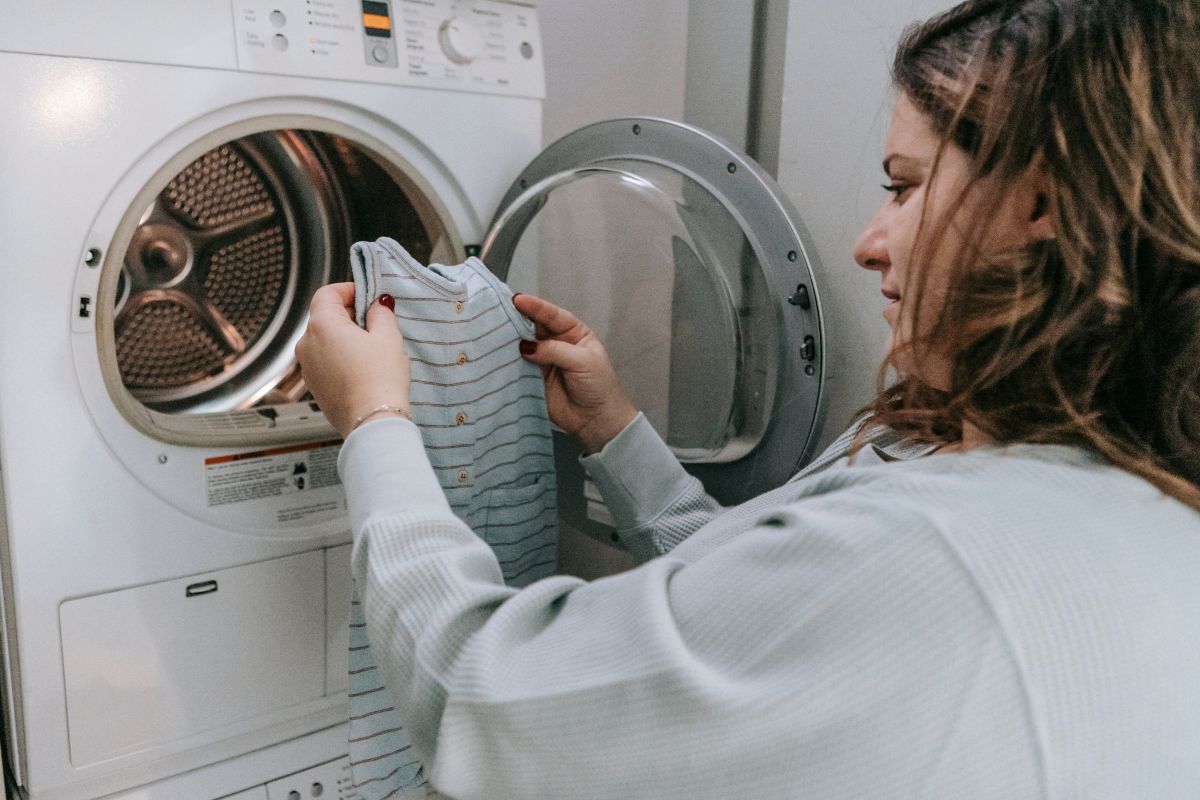
How To Clean Your Laundry Machine
Whether you are looking for a DIY cleaning solution, need to tackle mold, or simply want to drop in a commercial cleaning tab, this section will tell you everything you need to know to deep clean.
How To Clean Laundry Machine With Vinegar And Baking Soda
One of the most effective DIY cleaning solutions is a two-step treatment of vinegar and baking soda (or washing soda).
- For a front-loading machine, pour two cups of white vinegar into the detergent dispenser. For a top loading machine, add four cups of white vinegar directly into the drum.
- Run the longest, hottest water setting available on your machine. Many washing machines have a “clean cycle” setting. The acidity of vinegar helps cut through soap scum and mineral buildup, including residues left by detergent and fabric softeners.
- Afterward, add ½ cup of baking soda to the drum and run a second cycle on the longest hot water setting. Baking soda helps neutralize odors, and further lift lingering residue, giving your washer a complete refresh.
- Deep clean the exterior. Spray a 5% vinegar solution, or multipurpose cleaner, on the detergent drawer, crevices, and rubber seals, then wipe clean with a microfiber cloth.
How To Clean Mold In Laundry Machine
Next, for mold on non-porous surfaces, such as the rubber gasket on a front load washing machine, hydrogen peroxide is a safe and effective treatment. To treat, apply 3% hydrogen peroxide liberally, allow it to sit for 10 minutes, and then wipe the area clean (source).
Alternatively, you can use hypochlorous acid as another non-toxic option. I use the Force of Nature as my go-to disinfectant. It is an EPA registered disinfectant capable of killing a very wide array of germs, yeast, and mold.
Follow up by scrubbing the area with a multi-purpose spray or non-toxic detergent and dry thoroughly.
Do Not Clean Your Laundry Machine With Bleach
Bleach is unnecessary and unsafe. Its strong fumes, high toxicity, and potential to damage machine components make it unsuitable for regular use. Instead, stick with vinegar, baking soda, or non-toxic commercial cleaners for maintenance.
Speaking of safety around chemicals, never mix acids, such as vinegar, hydrogen peroxide, or hypochlorous acid. This can create potentially harmful chemical reactions. By following these methods individually, you ensure a safe, effective cleaning process for your washer.
Review The Manufacturer’s Instructions
For peace of mind, please review your washing machine manufacturer’s cleaning instructions. While some manufacturers may recommend using vinegar to deep clean a washing machine, other manufacturers caution against it. Instead, they may recommend conventional products, like Affresh. Personally, I do not recommend Affresh because many users report a lingering smell on clothing for multiple wash cycles, and the undisclosed chemicals and “natural” fragrance may pose safety risks. Learn more in my post on Natural Fragrance Safety.
Interestingly, the two active ingredients in Affresh – sodium percarbonate (oxygen bleach) and sodium carbonate (washing soda) – are common for many non-toxic washing machine cleaners. Thus, in my opinion, you can feel confident using a non-toxic option with similar active ingredients.
Download The Free Guide!
5 Powerful Steps To A Non-Toxic Home
Join our informed consumer community and get our free guide the “5 Powerful Steps To A Non-Toxic Home”.
How To Clean Laundry Machine With Commercial Washing Machine Cleaners
Further, for those who prefer convenience, non-toxic commercial products offer a reliable alternative to questionable conventional cleaning tabs. Interestingly, as I reviewed the ingredients of over a dozen washing machine cleaners, I found the majority were identical to the ingredients in oxygen bleach! Why pay more for cleaning tablets when you can buy a multi-purpose powder and get the same results? Therefore, I am including several non-toxic oxygen bleach powders you can use rather than buying separate products.
Branch Basics Oxygen Boost
First, Branch Basics Oxygen Boost is traditionally promoted for brightening clothing, but it goes far beyond the laundry. I use this oxygen bleach to clean my top loading machine. It contains the sodium percarbonate and sodium bicarbonate (baking soda), exactly what you need!
I use this powder for cleaning my shower, tile, and anywhere that needs a good scrub. It packs a powerful punch and is well loved by many. Learn more about my research on Branch Basics in my post Branch Basics Safe Cleaning Products Review.
Meliora Bleach Alternative
Second is Meliora Oxygen Brightener Bleach Alternative Booster (IREAD10 for 10% off), a product I have been recommending for years, along with Meliora’s laundry and cleaning products. It contains the same two active ingredients as conventional machine cleaners: sodium percarbonate and sodium carbonate (washing soda), but without any fillers or fragrance.
If you are looking to buy it in bulk, Meliora offers 2lbs and 40lbs refills! Meliora is a reputable company with quality products.
MamaSuds Oxygen Powder
Third, MamaSuds Extra Strength Oxygen Powder (IRLFY10 for 10% off) comes from a truly wonderful business. Just like Meliora’s, this oxygen powder is made with sodium percarbonate and sodium carbonate (washing soda).
If sustainability is a focus for you, MamaSuds uses minimal packaging. They use a kraft resealable bag, and produces products in small batches to minimize waste. In fact, I have tried and loved many of her products, including MamaSuds Dishwasher Powder.
Truly Free Washing Machine Cleaner
Lastly, Truly Free Washing Machine Cleaner is another non-toxic option. It uses citric acid, lemon juice powder, sodium acetate, sodium bicarbonate (baking soda), sodium citrate, and sodium chloride to clean effectively. While it is only a single-use product, it should provide a thorough, safe clean that is ideal for those seeking assurance that no harsh chemicals touch their clothes or skin.

How Often You Should Clean Your Washer
In my experience, most manufacturers recommend cleaning your washing machine once a month, or every 30 cycles. This frequency keeps buildup, odors, and mold at bay while ensuring your washer performs optimally. However, always check your washing machine’s manufacturer’s recommendations.
For maintenance, using a monthly commercial cleaner pod or DIY vinegar and baking soda solution on the interior is sufficient. After cleaning, leave the door open until the drum is completely dry to prevent residual moisture and mold growth. This can also be done after each cycle to keep moisture at bay.
Finally, I’d love to hear from you: what’s your favorite method for keeping your washer fresh? Leave a comment with your tips and tricks. Your experience may help someone else in the community maintain a clean, efficient laundry machine.
Conclusion: How To Clean Laundry Machine?
You Can Clean Your Laundry Machine Monthly By Safely Using Vinegar And Baking Soda, Quality Oxygen Bleach, Or A Non-Toxic Washing Machine Cleaning Powder.
In conclusion, cleaning your laundry machine doesn’t have to be complicated. Understanding why it matters and using safe DIY solutions, like the two-step vinegar and baking soda recipe, can help keep your washer fresh and efficient.
For a deep clean, use one of the following products:
- Branch Basics Oxygen Boost
- Meliora Oxygen Brightener Bleach Alternative Booster (IREAD10)
- MamaSuds Extra Strength Oxygen Powder (IRLFY10)
- Truly Free Washing Machine Cleaner
These options will help you maintain a fresh, clean washer that protects your clothes and your family’s health.
Monthly cleaning ensures every wash cycle is effective, mold is properly treated, your laundry smells clean, and your machine lasts for years. Remember, always check your washing machine’s manufacturer’s instructions, avoid harsh chemicals, like chlorine bleach, and don’t mix acids. With consistent care, your washer will stay in top shape, making laundry day a little easier and a lot more satisfying.
For those wondering about Method cleaning products, check out my blog post Is Method Cleaner Non-Toxic?.
Download The Free Guide!
5 Powerful Steps To A Non-Toxic Home
Join our informed consumer community and get our free guide the “5 Powerful Steps To A Non-Toxic Home”.






How much of the branch basics or Meliora do you use to run a washing machine clean cycle?
Hi Angela,
Branch Basics recommends using one scoop (about 1 tablespoon) of Oxygen Boost when running a washing machine cleaning cycle — especially if you’re doing regular maintenance (every few weeks).
For the Meliora Oxygen Brightener Bleach Alternative Booster, the manufacturer’s instructions recommend using a bit more (e.g., 1¼–1½ tablespoons) with a hot water/long cycle for deeper cleaning.
Does this help?
Hi Irina,
I always leave my front loading washing machine open after every wash, and I dry the entire rubber gasket inside and out after the last daily wash. I also clean it with either branch basics or peroxide. I have always done so and my washing machine never smells. I also open the soap dispenser and either dry the compartments or just leave it air dry. I use the Molly’s washing machine tabs once a month or every 30 washes. I am surprised you didn’t list it as a washing machine cleaner. Is there a reason why?
Hi Gloria,
Thank you so much for sharing your thoughtful cleaning routine — it sounds excellent!
Regarding the Molly’s washing machine tabs, we didn’t include them because we are not sure their “natural fragrance” ingredients are fully disclosed, and we prefer to feature products with complete transparency.
Warmly,
Irina