
Best Meat Sticks Guide: Best, Better, And Not A Fan
 Written by Irina Webb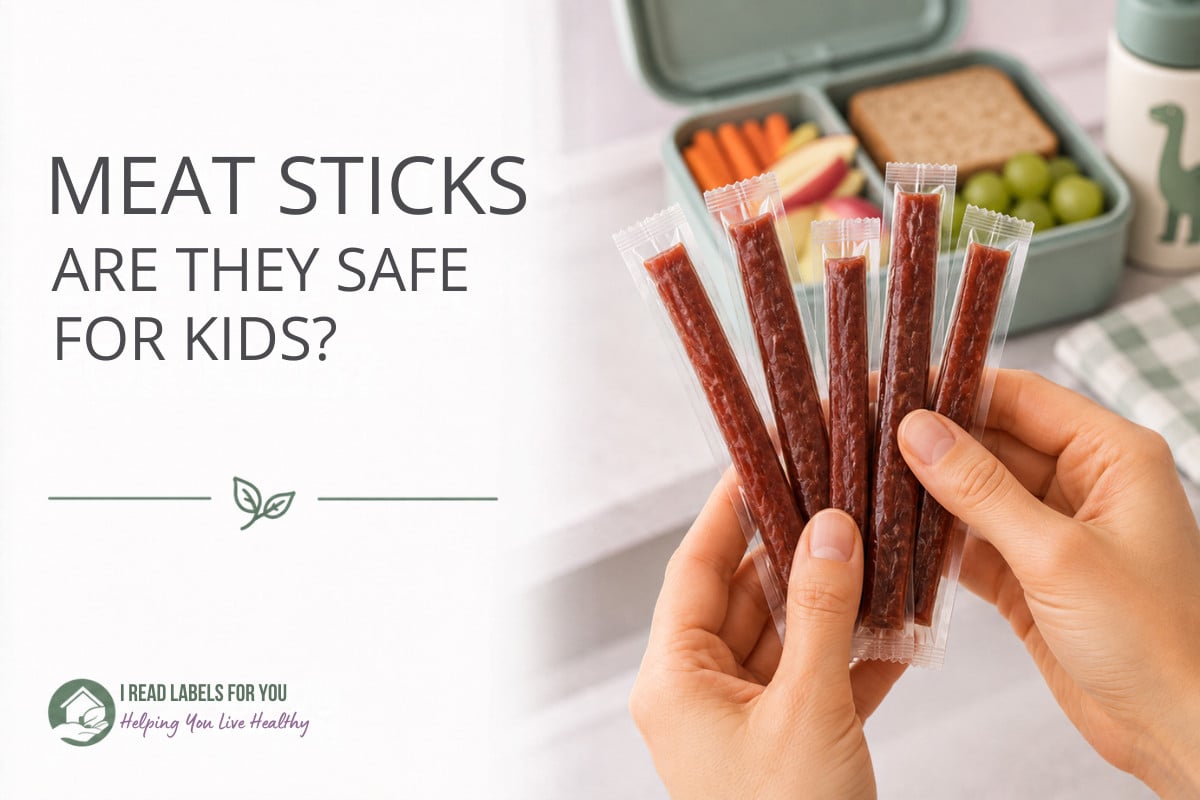
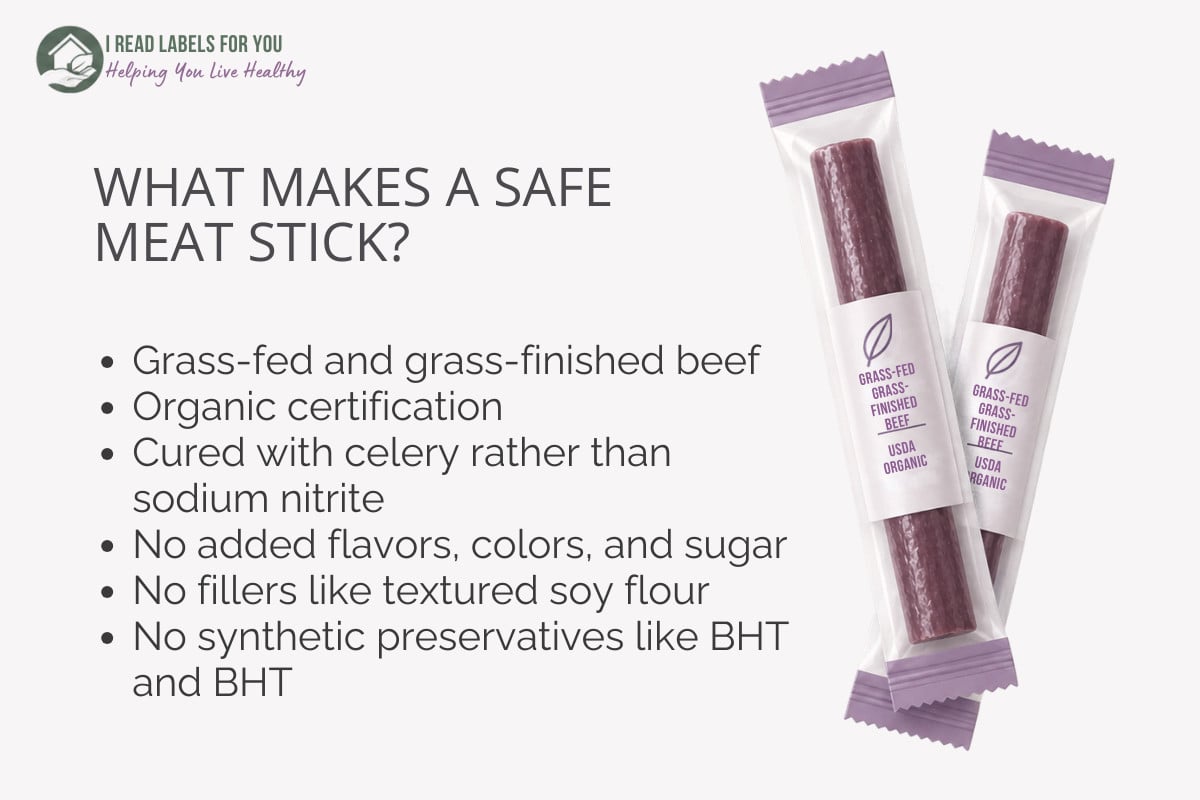
The best meat stick comes from beef that’s both grass-fed and grass-finished, carries organic certification, and is cured with celery rather than synthetic sodium nitrite. I grouped 25 popular meat sticks into Best, Better, and Not A Fan based on their labels, not their marketing. If a Better stick already works for your family, you do not need to panic. The Best list is the stronger starting point when you can choose.
Best Of The Best
- Artemis Organic Heart & Liver Infused Beef Stick (20% discount code)
Best
- Alderspring Ranch Wild Cow Organic
- Paleovalley 100% Grass-Fed Beef Sticks
- Thousand Hills Lifetime Grazed Beef Sticks
Better
- Chomps Original Grass-Fed & Finished
- Kirkland Signature Grass-Fed Beef Sticks
- Country Archer Original Beef Stick
Not A Fan
- Slim Jim Original
- Jack Link’s Original Beef Sticks
- Old Wisconsin Beef Sausage Snack Sticks
Don’t see yours? These are the highlights. I rated 25 in total, sorted into Best, Better, and Not A Fan, with the price per stick and the exact detail that decided each one. Get the full sorted list here.
Below, I show why each stick landed where it did, and which “clean” claims do not hold up once you turn the package over.
What Makes A Meat Stick Safe?
A meat stick can be four ingredients or twenty-four. That’s the whole story, and it’s why two packages sitting side by side at a similar price can be completely different foods.
You can sort almost any stick with three questions and one quick read of the ingredient panel.
Question 1: What Did The Animal Eat At The End Of Its Life?
This is the question that does the most work, and the front of the package rarely answers it outright. A “grass-fed” claim only promises grass somewhere along the way. Cattle can be raised on pasture and still moved onto grain for their final months, and the label holds up fine. There is no federal definition holding it in place either: the USDA withdrew its grass-fed marketing claim standard in 2016, so what the words mean now is up to each brand.
The wording you want is grass-finished, which some brands write as “100% grass-fed” or “lifetime grazed.” It means grass from start to finish. Raising cattle that way takes longer and costs more, so brands that do it tell you plainly and usually put it on the front. When a package says grass-fed and goes quiet after that, take the silence as your answer.
Question 2: Is Anything In It Certified Organic?
Organic certification covers the ground that a grass-finished claim does not: no routine antibiotics, no added hormones, and feed grown without most synthetic pesticides. Some sticks have organic beef, some have organic spices, and the best ones have both. Any organic ingredient is a point in the stick’s favor.
Question 3: How Was It Cured?
Every shelf-stable meat stick is cured, because curing is what keeps it safe in a warm car. What differs is the ingredients doing the work. I prefer celery powder or celery juice over synthetic sodium nitrite.
The Ingredients That Make Me Put A Meat Stick Back
A good stick’s ingredient list is short enough to read while you are standing in the aisle. Put one back if you see:
- Sodium Nitrite: a synthetic curing agent, where I’d rather see celery
- MSG (Monosodium Glutamate): a flavor enhancer that some people react to
- BHA and BHT: synthetic preservatives; BHA is listed as reasonably anticipated to be a human carcinogen in the U.S. National Toxicology Program’s Report on Carcinogens
- Artificial Colors such as Red 3: added only to make the stick look redder
- Corn Syrup or Corn Syrup Solids: added sugar in a savory snack, usually from conventional corn
- Mechanically Separated Chicken: a low-cost meat slurry rather than whole muscle meat
- Textured Soy Flour: a cheap protein filler, usually from conventional soy
- Natural Flavors or Natural Liquid Smoke: vague terms that do not tell you what is actually inside
One of these on a label does not make a stick dangerous. It simply means that when a cleaner option sits on the same shelf at a similar price, I’d rather you had that.
Best Of The Best Meat Stick
One stick sits in a tier of its own, for a reason no other brand in this guide can match.
Artemis Organic Heart & Liver Infused Beef Stick
Artemis Organic Beef Sticks clear every check above. They’re USDA Organic, 100% grass-fed and grass-finished, and blended with beef heart and liver. You get 8 grams of protein and a full day’s vitamin B12 in one stick. If organ meat is something you’d like in your diet but would never cook at home, this is an easy way in.
What earns the top spot is that Artemis publishes its lab results. An accredited outside lab tested the sticks for glyphosate, roughly 180 pesticides, roughly 35 PFAS compounds, bisphenols, phthalates, and heavy metals. You can read every panel, dated and signed, on the Artemis product page.
Here’s the part I find most convincing. They also publish the nitrate reading from their celery cure, and it’s not zero. A company testing for appearances leaves a number like that out. Publishing it is what makes the rest of the page believable.
You do not need a lab report to eat lunch, and a brand without one is not doing anything wrong. Most food has never been tested this way. Artemis is simply the only stick here that shows you its numbers.
These are the priciest sticks in the guide, and I will not pretend otherwise. I still think they earn it. They taste genuinely good, and since I do not eat them by the handful, a box lasts me a long time.
Best Meat Stick Options
Sticks in the Best group have certified organic beef together with confirmed grass-fed and grass-finished sourcing. Or they’re 100% grass-fed and grass-finished with organic ingredients elsewhere on the label. There are five all together, and here are three of them.
Alderspring Ranch Wild Cow Organic
The shortest ingredient list of anything I reviewed: organic grass-fed beef, water, salt, and celery powder. That’s the whole label. No sugar of any kind, not even a fermentation aid, and no flavoring beyond salt. It’s great for you if you want the simplest possible label and do not need a seasoned or smoky stick. These are a splurge, and they taste like one.
Paleovalley 100% Grass-Fed Beef Sticks
Grass-fed and grass-finished, with organic dextrose and organic spices, and no added sugar. The standout number is sodium: 220 mg per stick, the lowest in the entire guide, where plenty of sticks run past 400 mg. It’s great for you if you’re watching sodium or packing these for a child.
Thousand Hills Lifetime Grazed Beef Sticks
“Lifetime Grazed” is their way of saying the cattle never ate grain, which is exactly the claim you want. The seasonings are organic, and the farms are verified regenerative by the Savory Institute, meaning the grazing is managed to rebuild soil rather than deplete it. It’s great for you if how the land is farmed matters to you as much as what is in the stick.
Better Meat Stick Options
These are solid sticks with one piece missing. Usually it’s one of these:
- The brand says “grass-fed” but never confirms “grass-finished.”
- The beef is certified organic, but with no “grass-finished” claim.
- The beef is grass-fed and grass-finished, but nothing in the stick is organic.
- A real added sugar shows up on the list, rather than a small fermentation aid.
If one of these is already in your rotation, I would not panic. I simply think the Best group is the stronger choice when you have one. There are eleven in this group all together, and here are three examples.
Chomps Original Grass-Fed & Finished
The one you are most likely to find on an ordinary grocery shelf, and a real step up from what sits beside it. The beef is grass-fed and grass-finished, there’s no added sugar, and the cure is cultured celery powder with cherry powder. It lands in Better for one reason: nothing in it is organic. Worth knowing before you stock up is that Chomps issued a voluntary recall in 2025 over metal fragments, which they handled openly.
Kirkland Signature Grass-Fed Beef Sticks
The best value in the whole guide, by a wide margin. The beef is grass-fed, but the finishing is never confirmed and there are no certifications beyond the claim on the front of the bag. It’s great for you if you’re feeding a family, buying in Costco quantities, and want a real upgrade from a gas-station stick without the organic price.
Country Archer Original Beef Stick
A family-owned brand since 1977, with a clean, readable ingredient list and a 100% grass-fed claim. What is missing is any statement about finishing, which is the single detail that would move it up. It’s great for you if you want something widely stocked that tastes closer to a traditional snack stick.
Not A Fan Meat Sticks
The line between Better and Not A Fan is straightforward. These have conventional sourcing, with no grass-fed or organic claim anywhere, and most carry several of the ingredients listed earlier.
Plenty of people eat these without any obvious trouble. I just think you have better choices. There are eight in this group, and here are three.
Slim Jim Original
The clearest illustration of what separates the groups. It opens with mechanically separated chicken rather than whole beef, then adds textured soy flour, corn syrup, and sodium nitrite. There’s no “grass-fed” claim and no organic ingredient on the package.
Jack Link’s Original Beef Sticks
These ones carry sodium nitrite, BHA, BHT, MSG, and Red 3 dye. There’s a wrinkle worth knowing: the company has said publicly that it’s moving from sodium nitrite to celery juice across its products, but the panel on this particular stick still lists nitrite. Formulations change at different speeds in different places, so read the package in your hand rather than trusting the news.
Old Wisconsin Beef Sausage Snack Sticks
Synthetic sodium nitrite and corn syrup solids, with conventional beef. Nothing unusual for this shelf, which is rather the point.
Bottom Line: What Is The Best Meat Stick?
The best meat stick is not the one with the most claims on the front. It’s the one with the shortest ingredient list and the most specific sourcing language.
To sort any package in about thirty seconds, do two things. First, look for two words together on the front: “grass-fed” and “grass-finished.” One without the other is not the same thing. Then turn it over and read the list to the end. Put it back if you see:
- Sodium Nitrite
- MSG
- BHA and BHT
- Artificial Colors
- Corn Syrup or Corn Syrup Solids
- Mechanically Separated Meat
- Textured Soy Flour
If the list is short and you recognize everything on it, you’re most of the way there.
For the cleanest option with published testing behind it, consider the Artemis Organic Heart & Liver Infused Beef Stick (20% off is embedded in the link).
And if you’d like my verdict on Tillamook, The New Primal, Vermont Smoke & Cure, Righteous Felon, Nick’s Sticks, Mission Meats, and the rest of the 25, click here to get the full sorted list.
Meat Stick FAQ
Are Meat Sticks Healthy?
Some are and some are not, and the gap between them is wide. A well-made stick is whole-muscle beef, salt, a celery cure, and spices, giving you 8 to 12 grams of protein with no added sugar. A poorly made one is mechanically separated meat, filler, corn syrup, and synthetic preservatives. Both sit on the same shelf at a similar price, so the label is what tells them apart.
Are Meat Sticks Better Than Protein Bars?
Often, yes, for a simple reason. A good meat stick has four or five ingredients you recognize, while many protein bars have twenty-five, including several sweeteners. Read both labels and pick the shorter one.
Are Meat Sticks Safe For Kids’ Lunchboxes?
They work well for school. They’re shelf stable, need no refrigeration, are easy for a child to open, and deliver real protein instead of a sugar spike. Choose a lower-sodium option and cut the stick into pieces for a younger child.



Before commenting, please read our Comment Policy.