Hiker Coffee
This page contains affiliate links, which means that if you click on the affiliate link and buy an item, I’ll receive commissions.
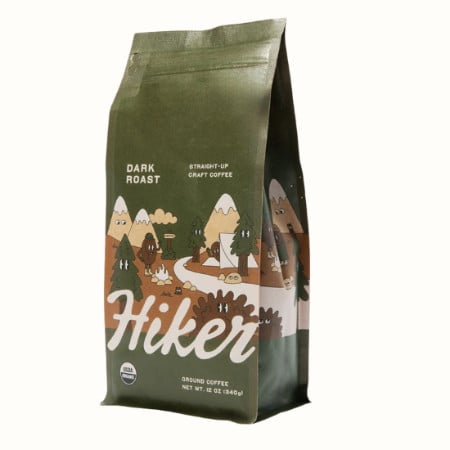
Hiker Coffee is USDA Organic coffee from a Wisconsin roaster that publishes third-party Eurofins lab reports. I like that they test for mycotoxins, mold and yeast, heavy metals, pesticides, glyphosate, and AMPA, and that they show actual numbers instead of relying only on broad “clean coffee” claims. Use code IREAD for 20% off.
Read below to see:
- what Hiker tests for beyond mycotoxins
- how the heavy metals results compare to California Prop 65 trigger levels
- what I still want to see before calling the testing complete
More info
Why I Like Hiker Coffee
I like Hiker Coffee because it combines two things I look for in coffee: USDA Organic certification and published lab reports.
Many coffee brands use clean-sounding language. Hiker goes further by sharing third-party reports from Eurofins, a major independent testing lab.
That does not mean every bag is perfect. It means the brand is more transparent than most coffee brands I see.
What They Test For
The Hiker Coffee reports I reviewed included testing for:
- mycotoxins
- mold and yeast
- heavy metals
- about 500 pesticides
- glyphosate
- AMPA, which is a glyphosate breakdown product
This is the kind of testing I like to see for coffee. Coffee is an agricultural product, and agricultural products can vary by lot, crop, and origin.
What The Mycotoxin Results Showed
The mycotoxin results were reassuring in the reports I reviewed.
- Ochratoxin A: less than 1 ppb
- Aflatoxins: less than 0.5 ppb each
- Mold and yeast: less than 10 CFU/g in the Peru report
For context, the EU limit for Ochratoxin A in roasted coffee is 3 ppb. The Hiker report I reviewed did not detect it down to 1 ppb, which is below that EU limit.
I would not call any coffee “mycotoxin-free.” The more accurate phrase is non-detect at the lab’s stated limits.
What The Heavy Metals Results Showed
The heavy metals results I reviewed were also well below California Prop 65 daily trigger levels.
In the Peru report, lead, cadmium, and mercury were reported at less than 5 ppb, and arsenic was reported at less than 10 ppb. Based on a 12 g coffee serving, those results are below the Prop 65 trigger levels.
The espresso report did detect cadmium at a low level: about 0.114 mcg per 12 g serving. That is about 2.8% of the California Prop 65 cadmium trigger. Lead and mercury were non-detect at the lab’s stated limits.
This is why I do not say “heavy-metal-free.” I say the results I reviewed were low and reassuring.
What About Pesticides And Glyphosate?
One report included a broad pesticide screen of about 500 pesticides. The pesticides in that screen were reported below the lab’s stated limits.
Glyphosate and AMPA were also reported below the lab’s stated limits.
That matters because many coffee brands never show this level of testing. Hiker does.
What To Keep In Mind
The reports I reviewed were for specific lots. A lab report proves what was found in that tested lot. It does not prove every future bag will have the same numbers.
I also found public reports for the medium/flavored Peru lot and the espresso Colombia lot. I would still like to see current reports for every roast, including dark roast and decaf.
That said, I appreciate that Hiker publishes real lab reports. That is more than most coffee brands do.
How To Buy
You can shop Hiker Coffee through my link below.
Use code IREAD for 20% off.